
A Trip to See the Seals at Newburgh Beach
A wonderful morning visit to the Forvie National Nature Reserve in Aberdeenshire, Scotland
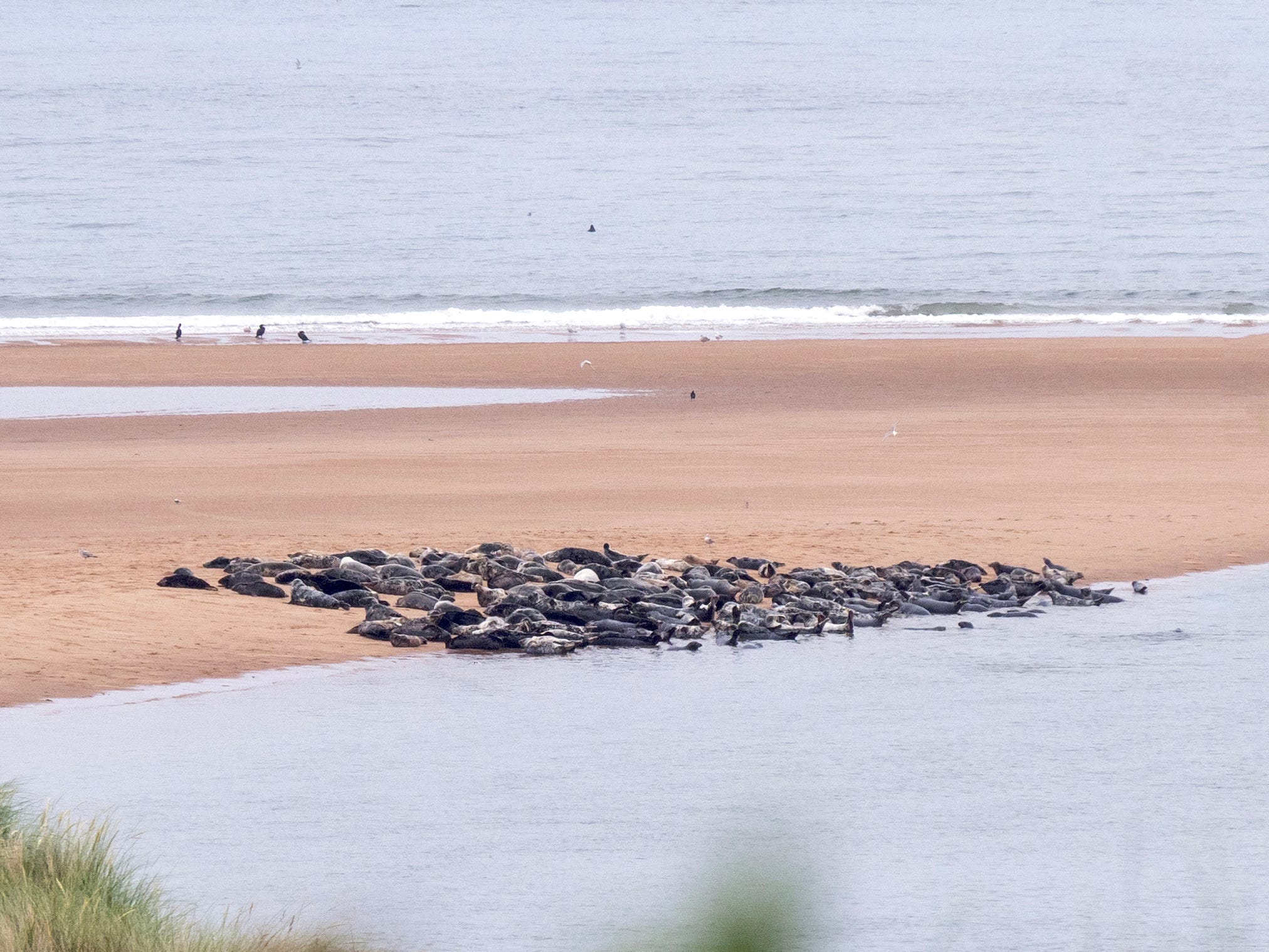
I have been wanting to visit Newburgh Beach, a little north of Aberdeen, since I read about its seal colony. Last week Matt and I finally got round to a trip on a calm but dull morning - perfect conditions for a stroll.
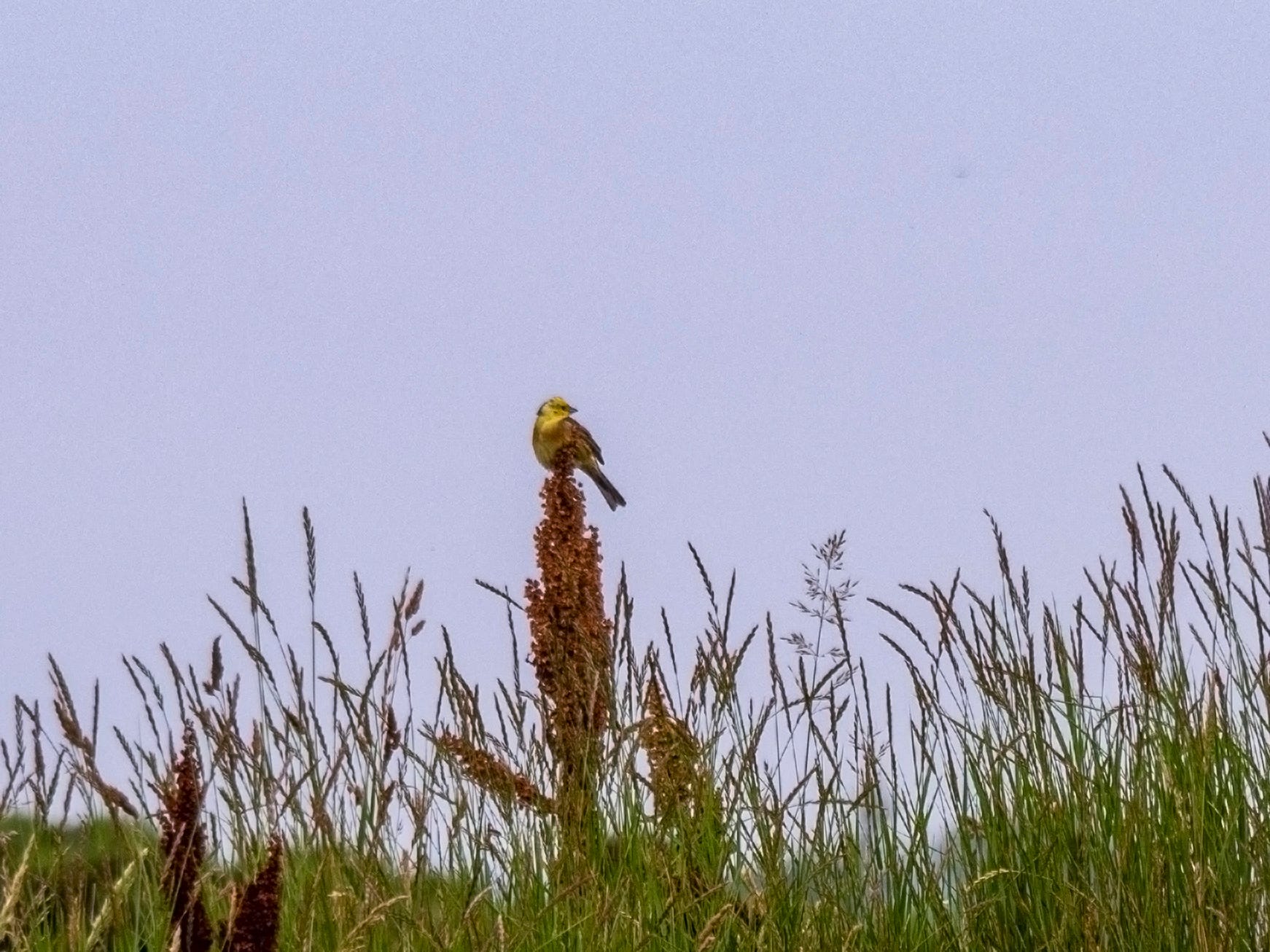
On arriving at the car park we were immediately aware of the sounds of terns and a singing yellowhammer. The yellowhammer’s distinctive song always reminds me of my childhood, because the hedgerows where I grew up were always alive with this song in summer. A quick scan soon revealed the singing bird perched on the seed head of a curled dock plant.
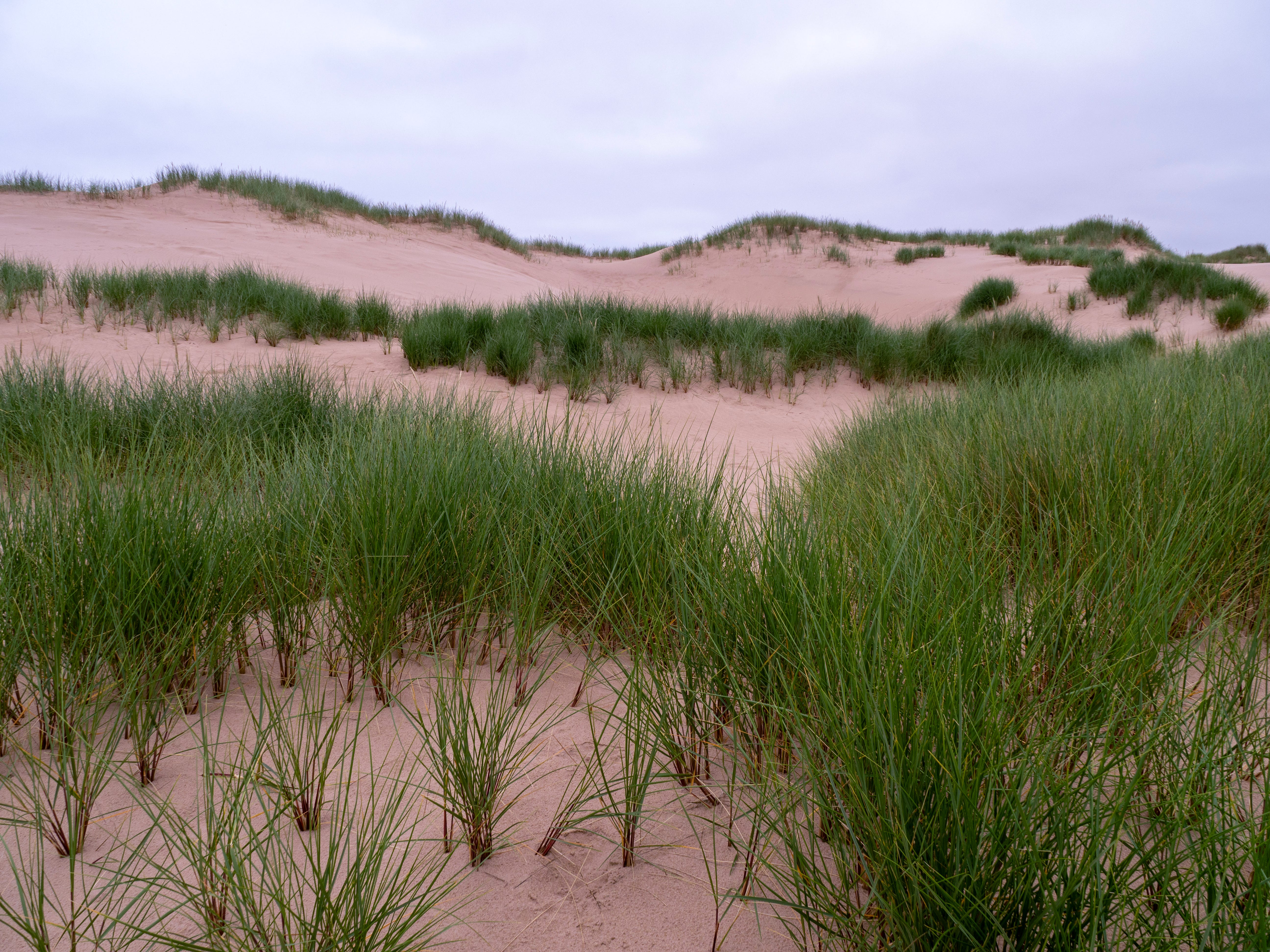
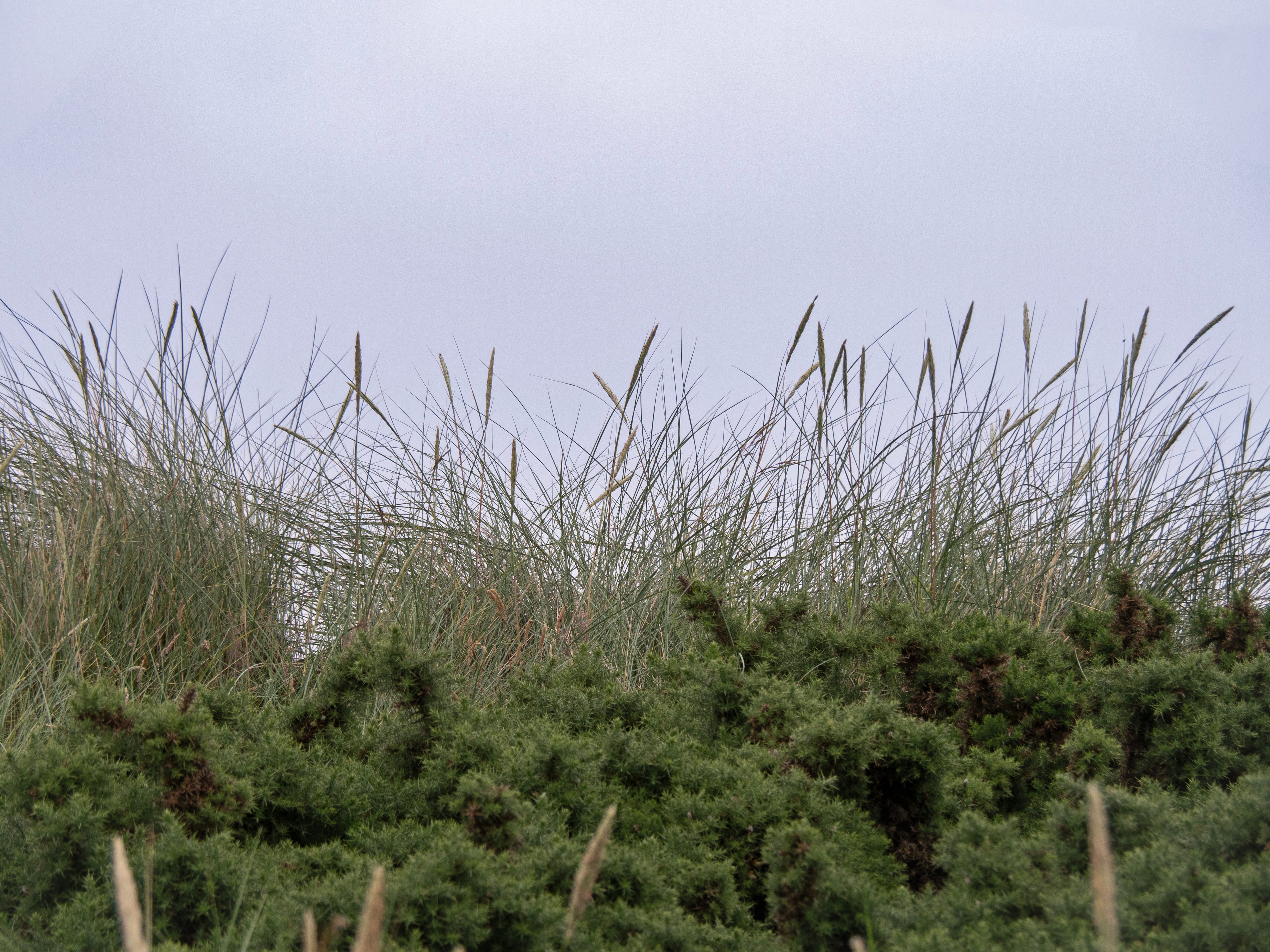
Newburgh Beach, on either side of the Ythan River Estuary, is backed by extensive sand dunes which form part of the large Forvie National Nature Reserve. From the car park a boardwalk headed off into the sand dunes.
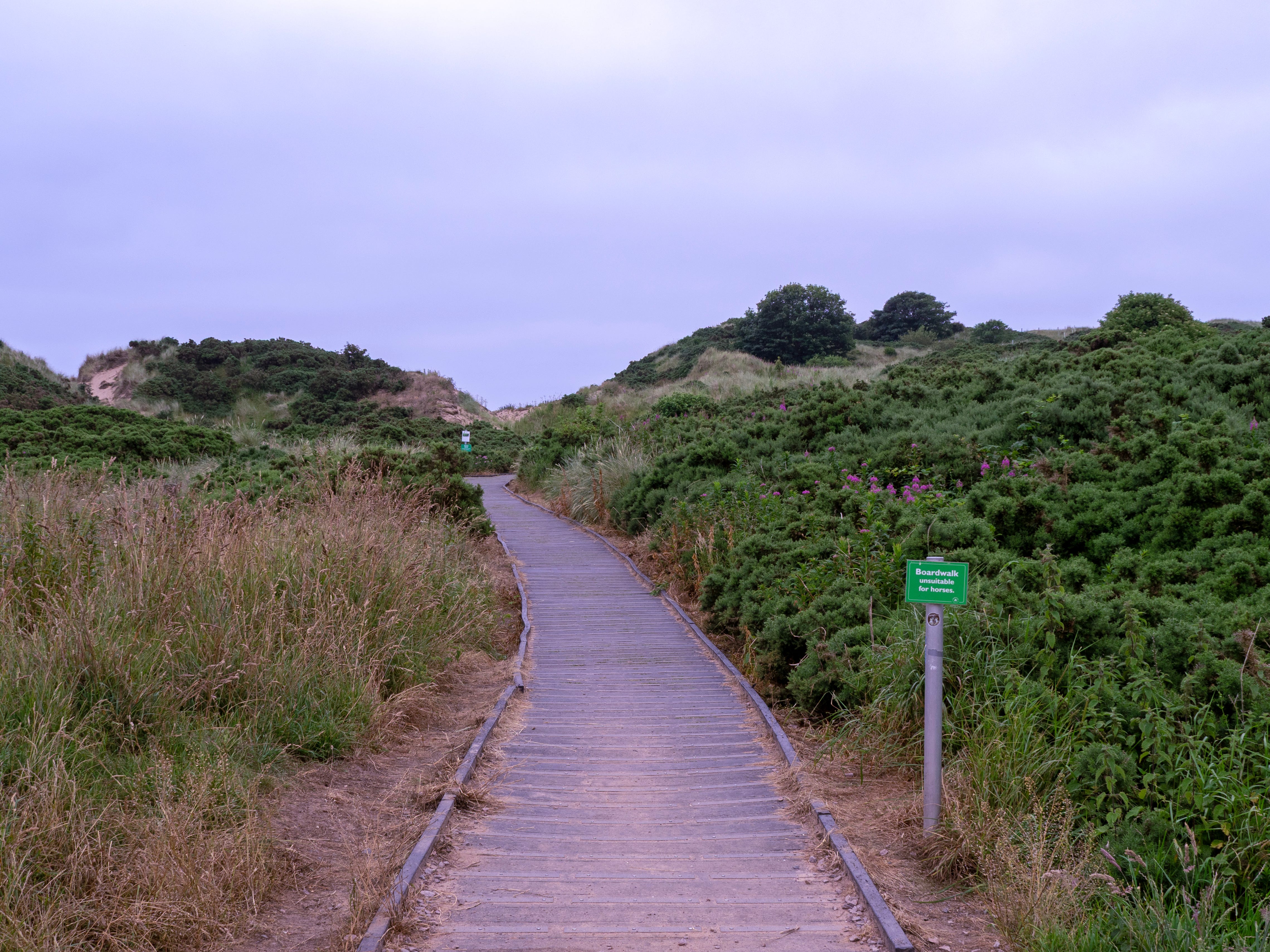
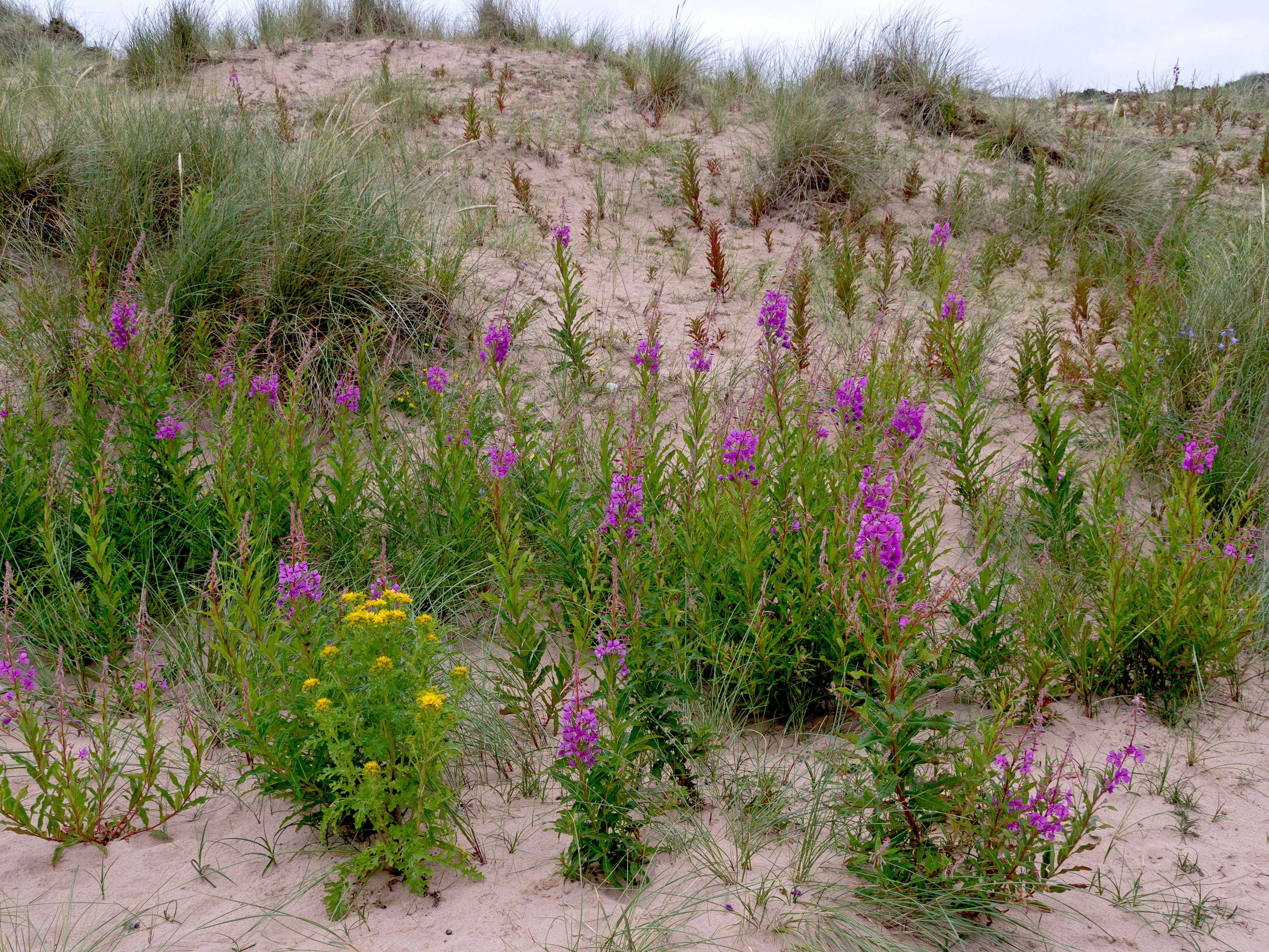
The boardwalk soon came to a fork. One way led straight down towards the beach, while the other led up into the dunes to a higher level viewing platform. We chose to follow the latter. As we climbed gently, accompanied by the songs of skylarks, we passed many lovely flowers growing wild among the dunes. Shown below are rosebay willowherb (fireweed), harebell and Rugosa rose.


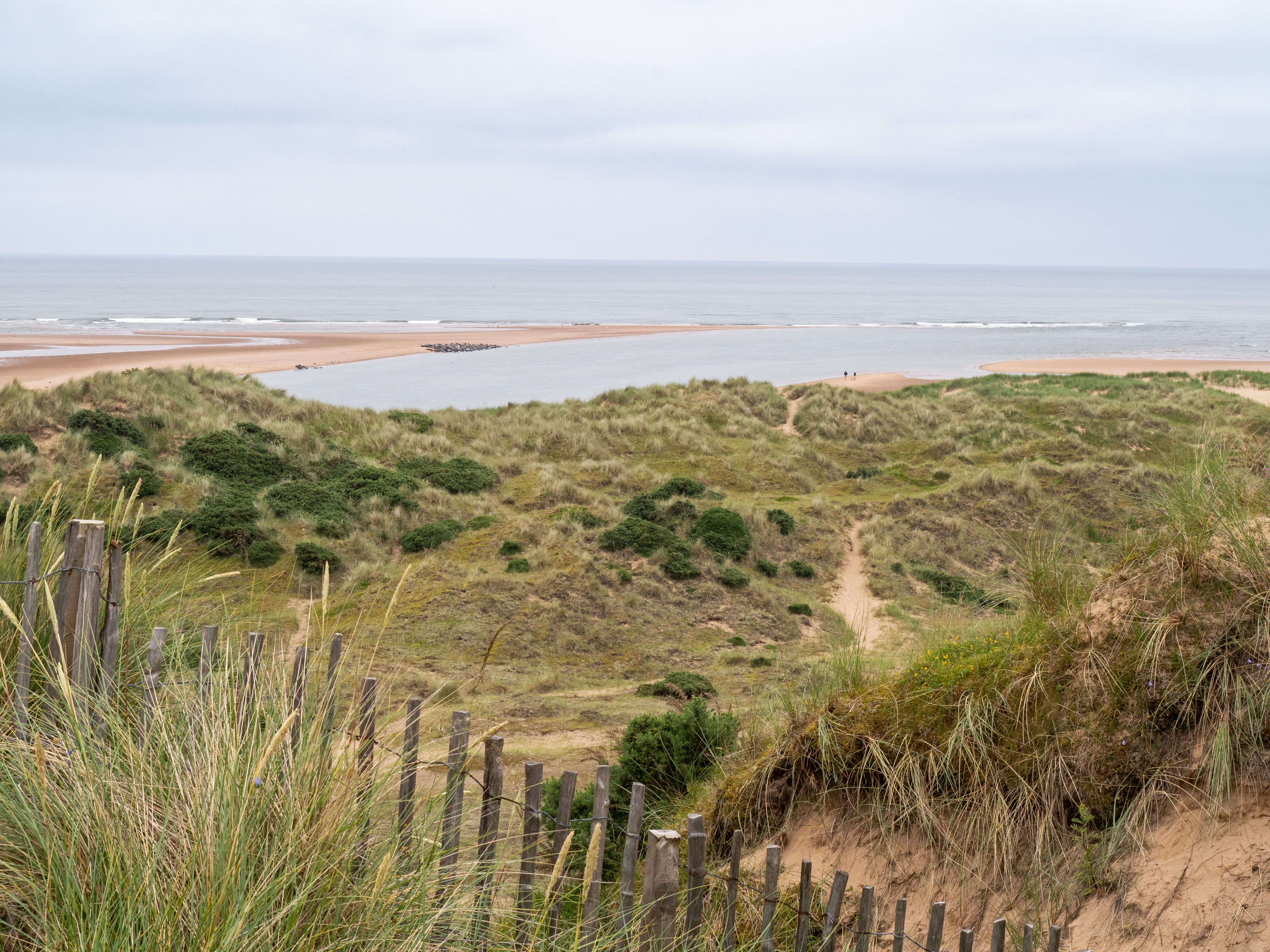
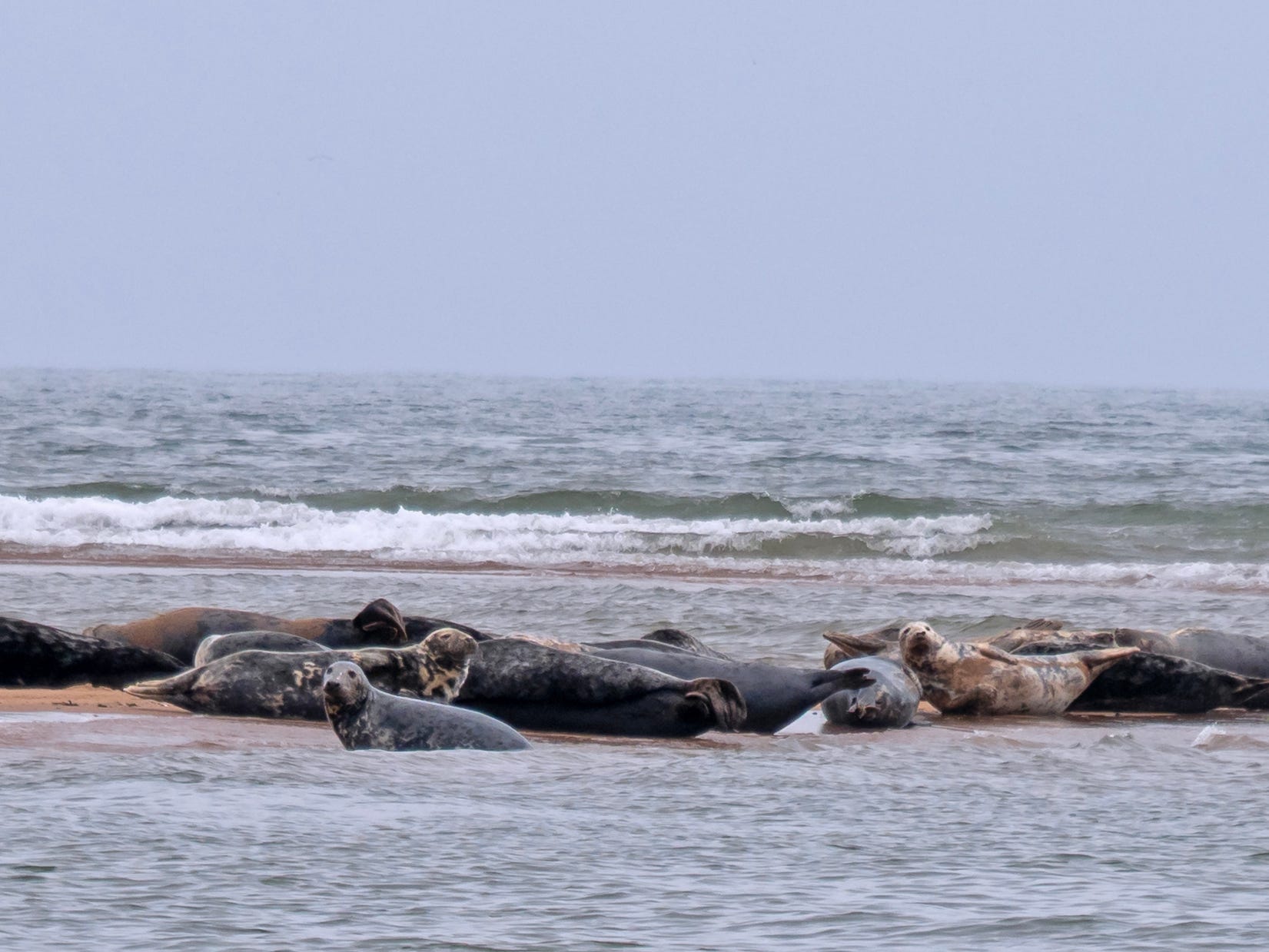
We soon reached the viewing platform, which had a convenient bench. Here we got our first view of the seals - a group of grey seals hauled out on the sandy beach.
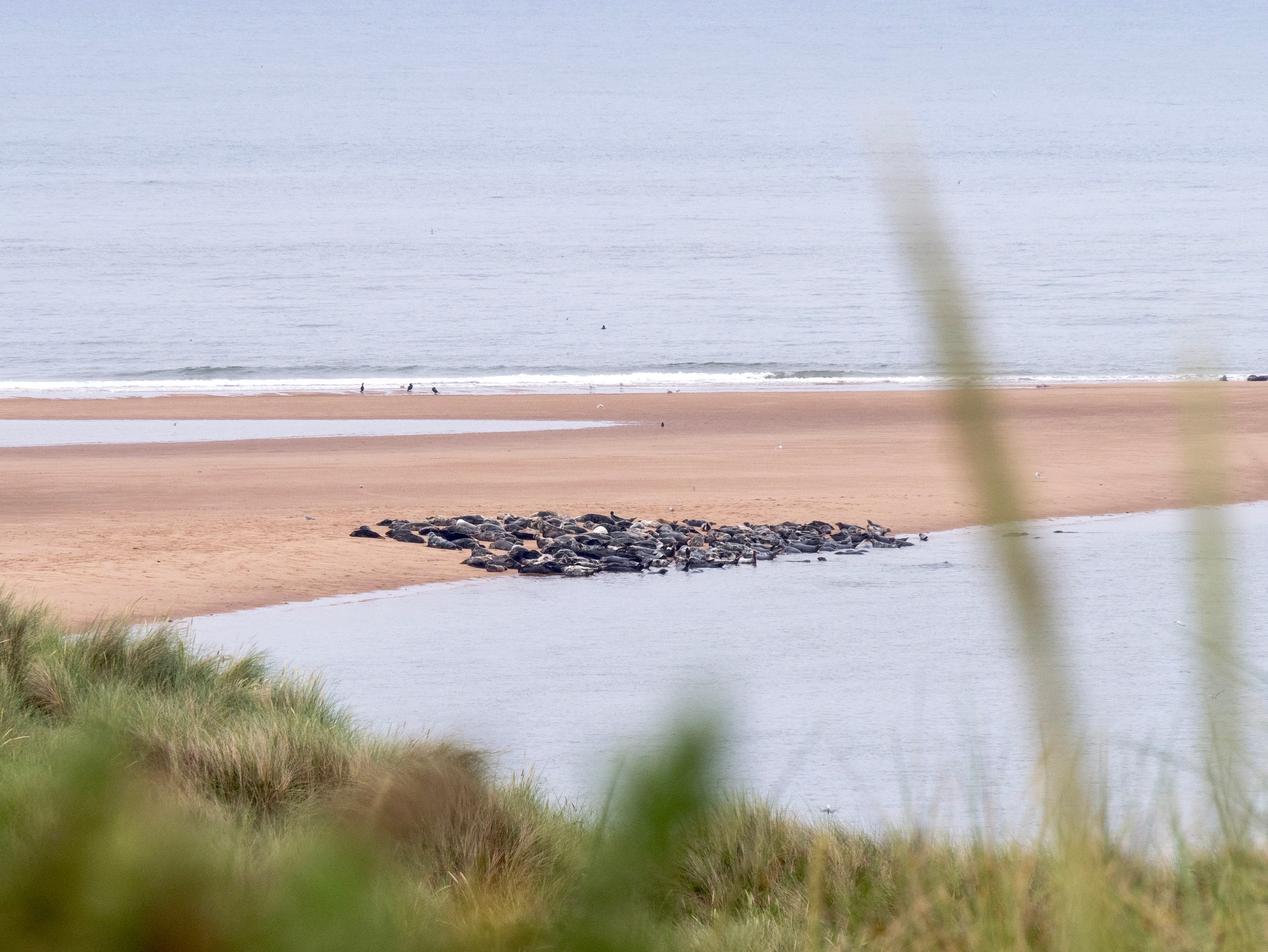
The seals were resting peacefully. We were aware of continual moaning and wailing sounds as the seals communicated with each other - I had not realized that they are so vocal!
Another large group could be seen further along the beach resting at the edge of the waves.
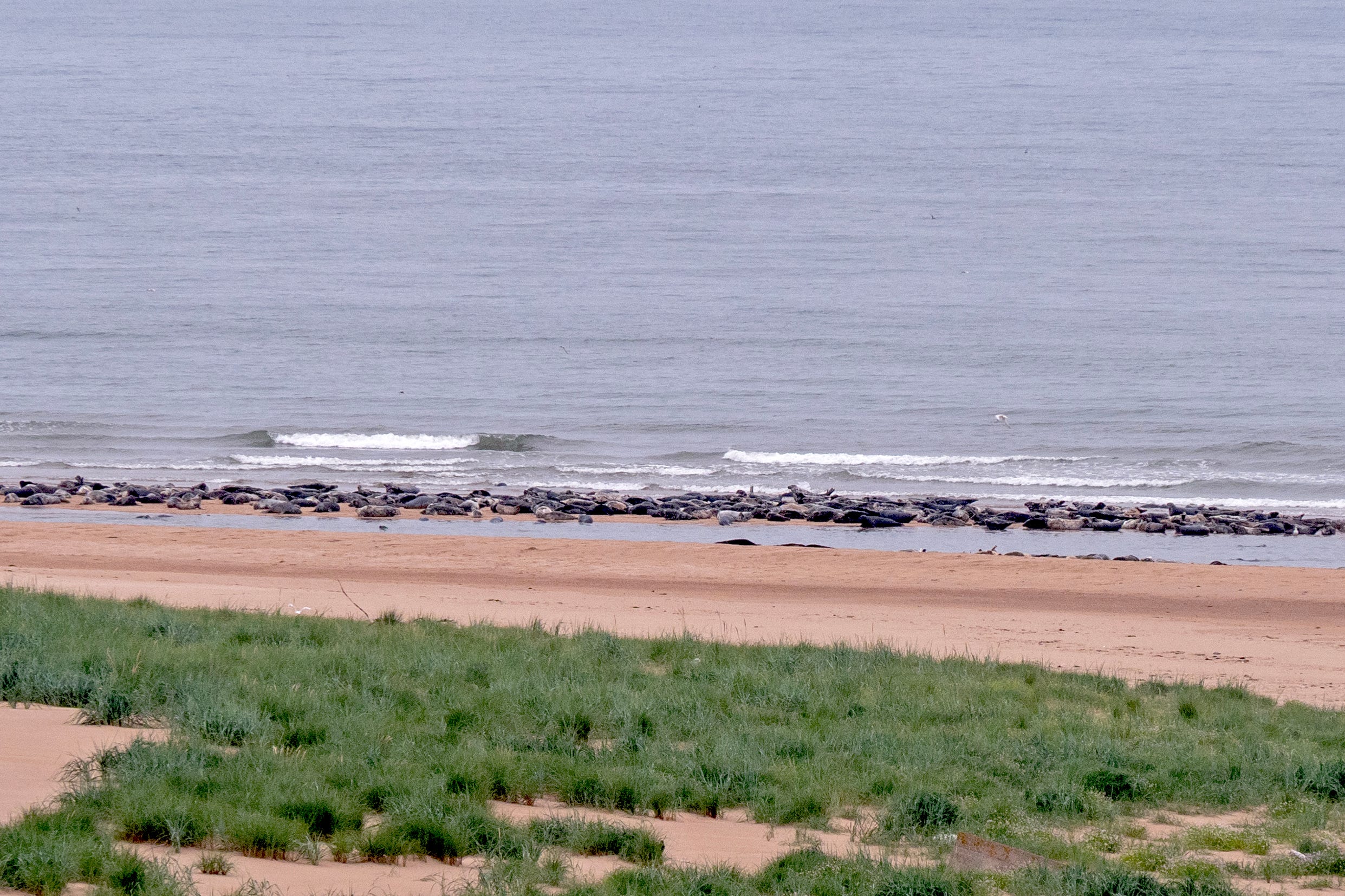
The Forvie National Nature Reserve is a designated haul-out site for the seals, meaning that the colony is protected and it is an offense to disturb the animals. Grey and common seals are present here throughout the year, with numbers rising in autumn and winter when the grey seals give birth to their pups. Numbers are actually at their lowest in mid-summer when we visited, so we were very happy to see so many!
In addition to the seals, the viewing platform provided an excellent view over the River Ythan Estuary.
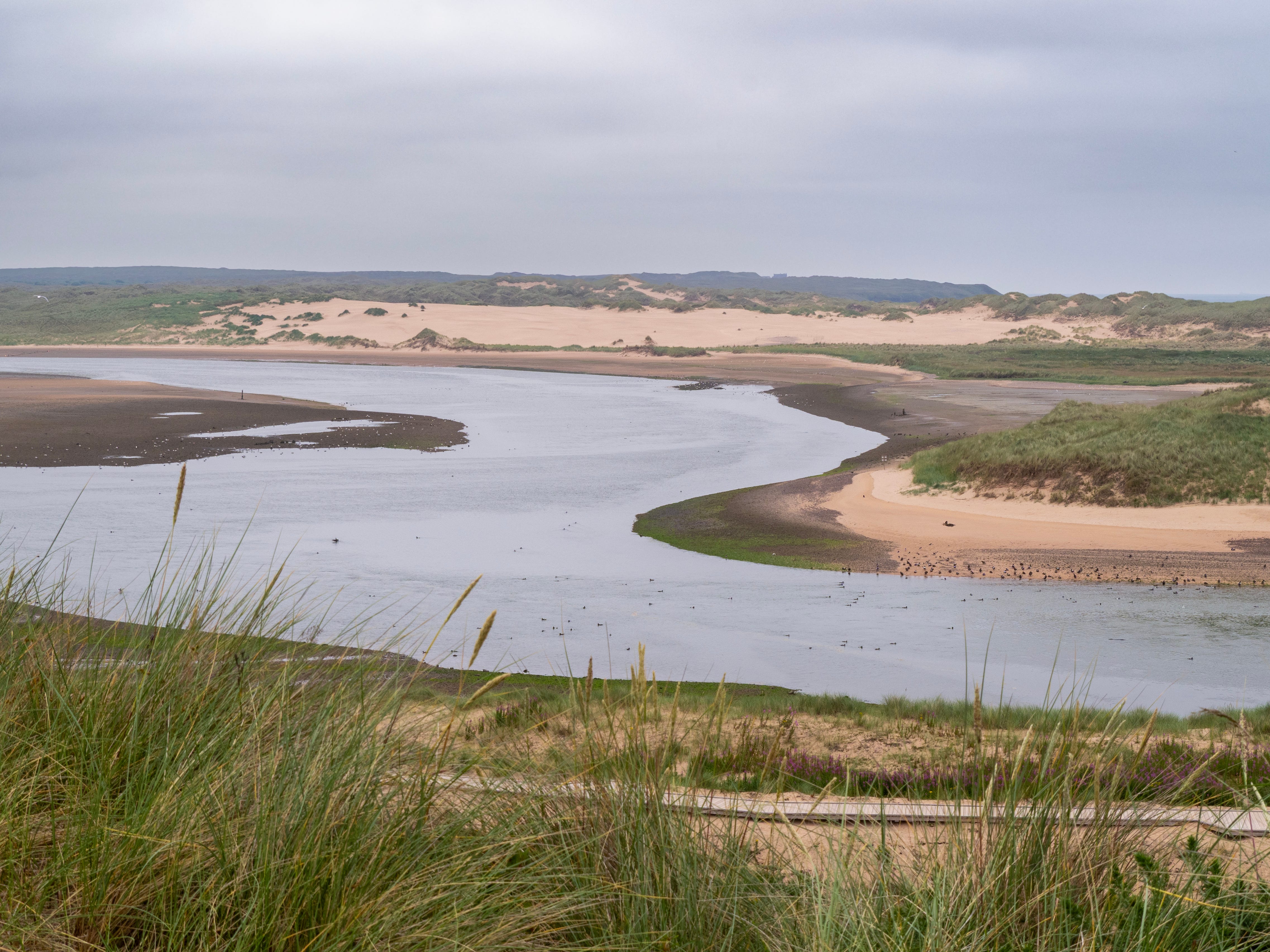
The terns that we could hear on arriving at the car park breed in a mixed colony on the other side of the estuary. Sandwich, Arctic, common and little terns breed here. Terns nest on the ground, and access to the beach around the nesting colony is restricted in summer to prevent people from trampling over the vulnerable eggs and chicks.
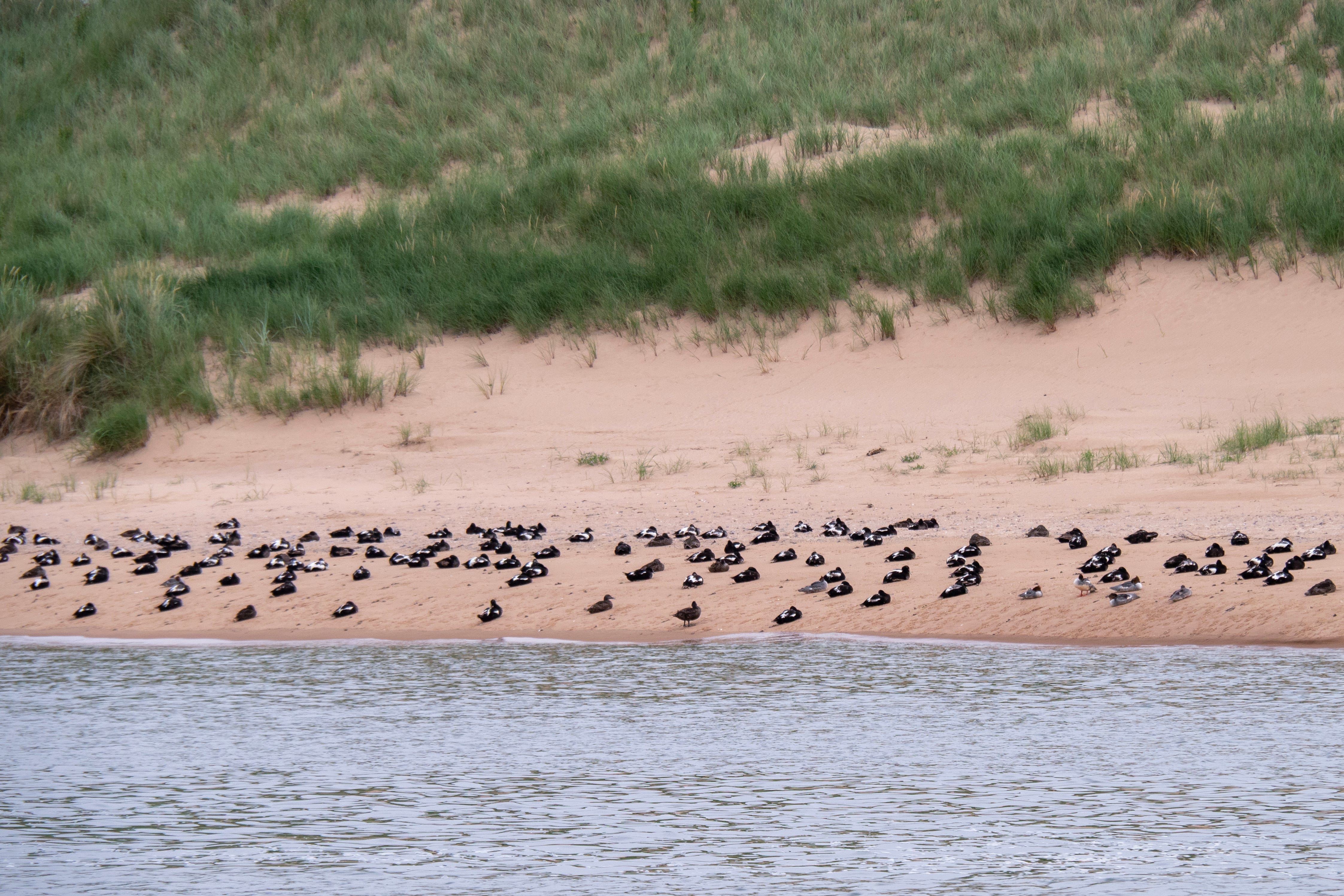
The Ythan Estuary also has a large colony of eider ducks. We could see many of these resting on the other side of the estuary. The ducks were in the middle of their annual moult (known as being in eclipse), and the males did not therefore have their usual distinctive black and white plumage.
After enjoying the views from the viewing platform, we continued along the path through the sand dunes. This was a very pleasant stroll, with more wildflowers and views of the sea.
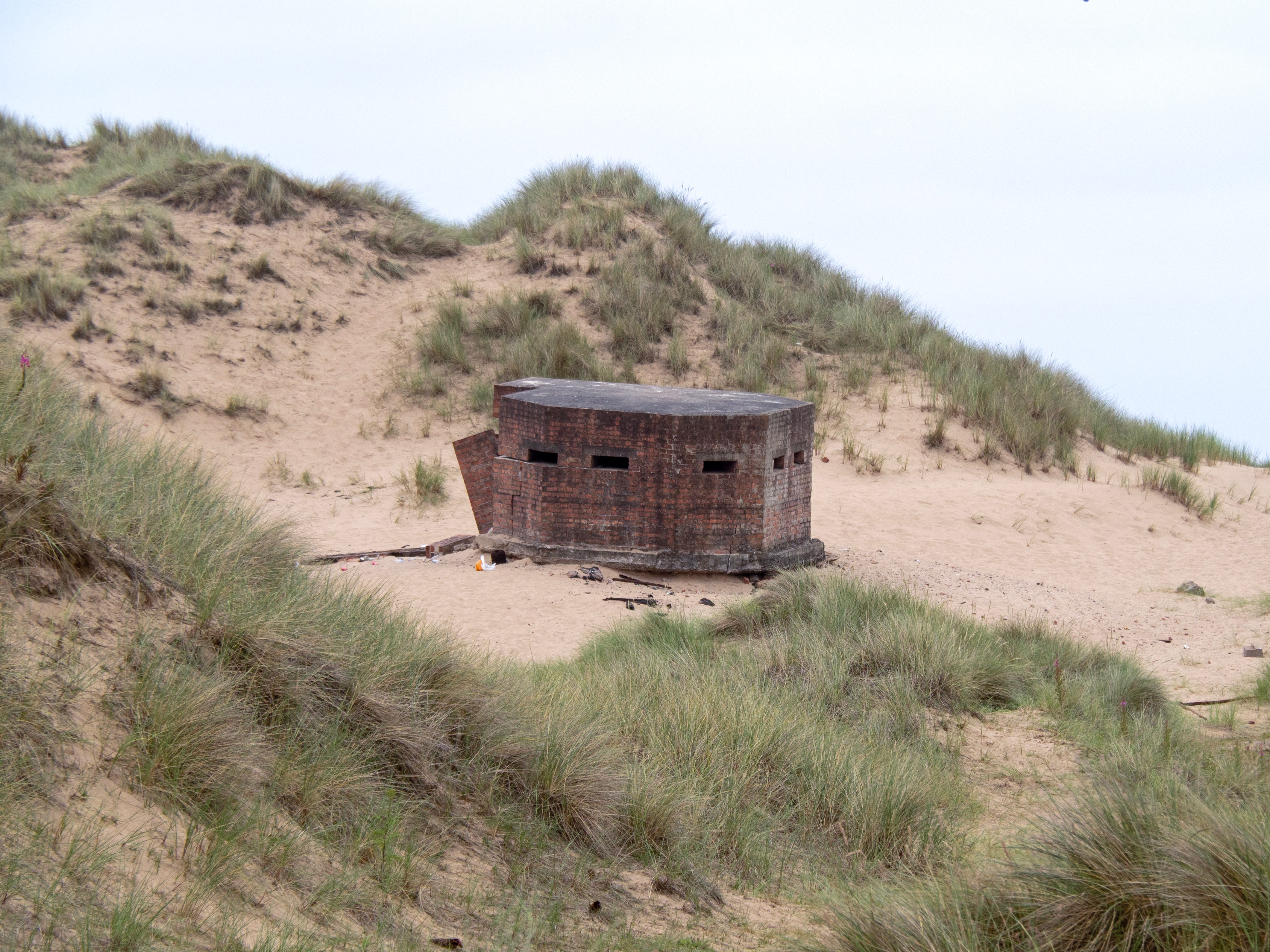
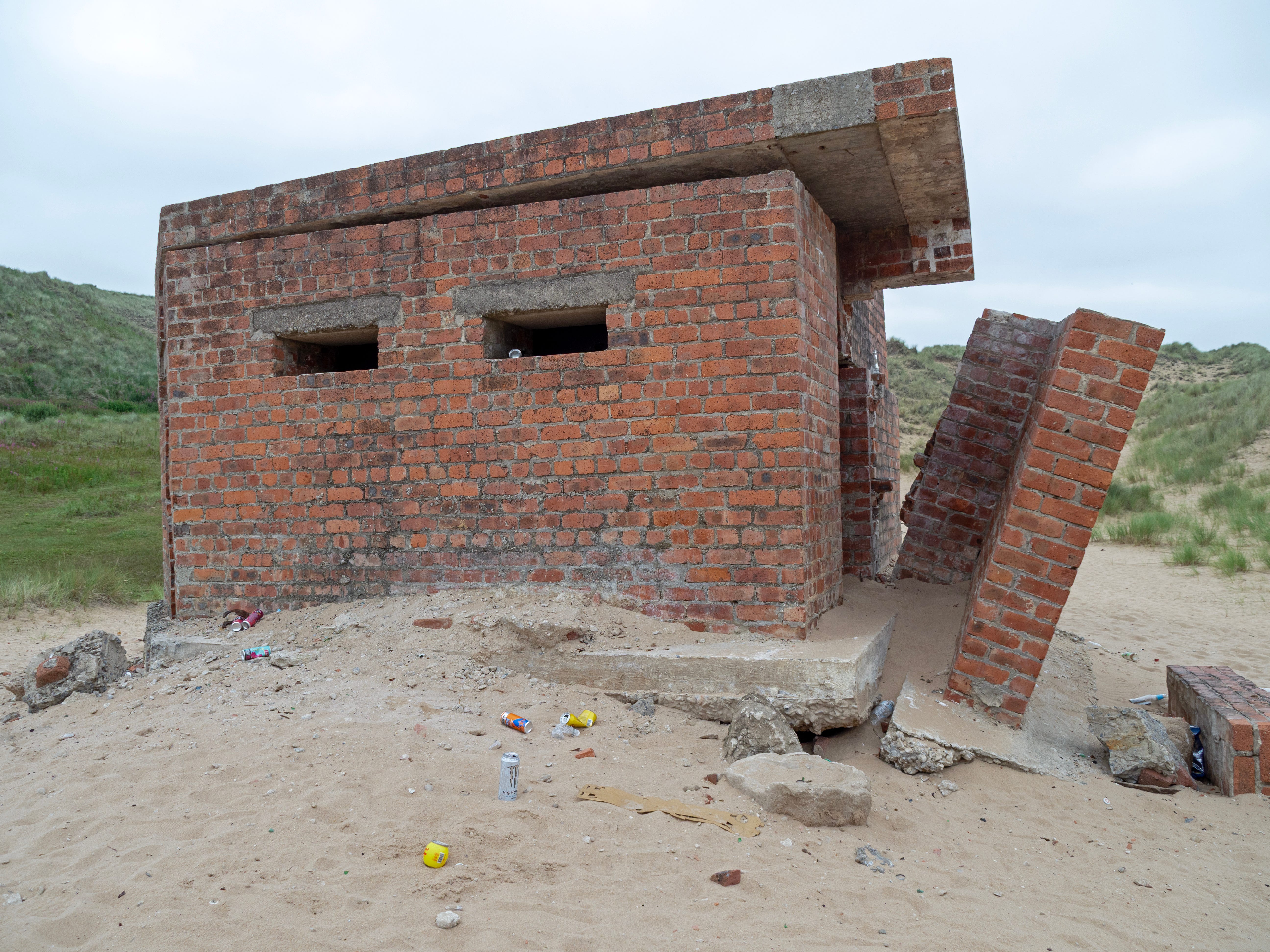
We found a dilapidated old pillbox from WW2, which judging by all the discarded cans and bottles appeared to be a hangout for local youths. Such a pity about all the litter!
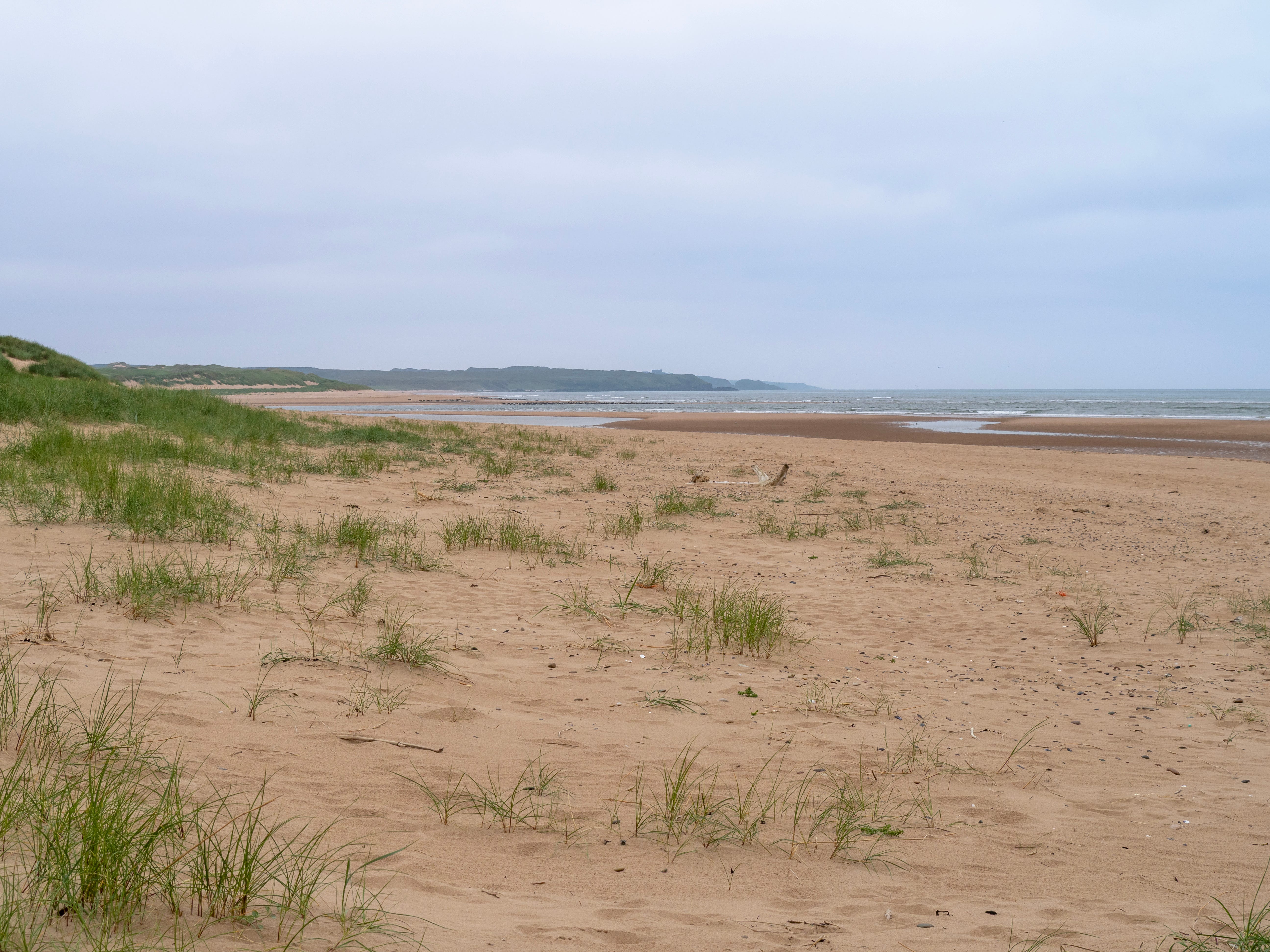
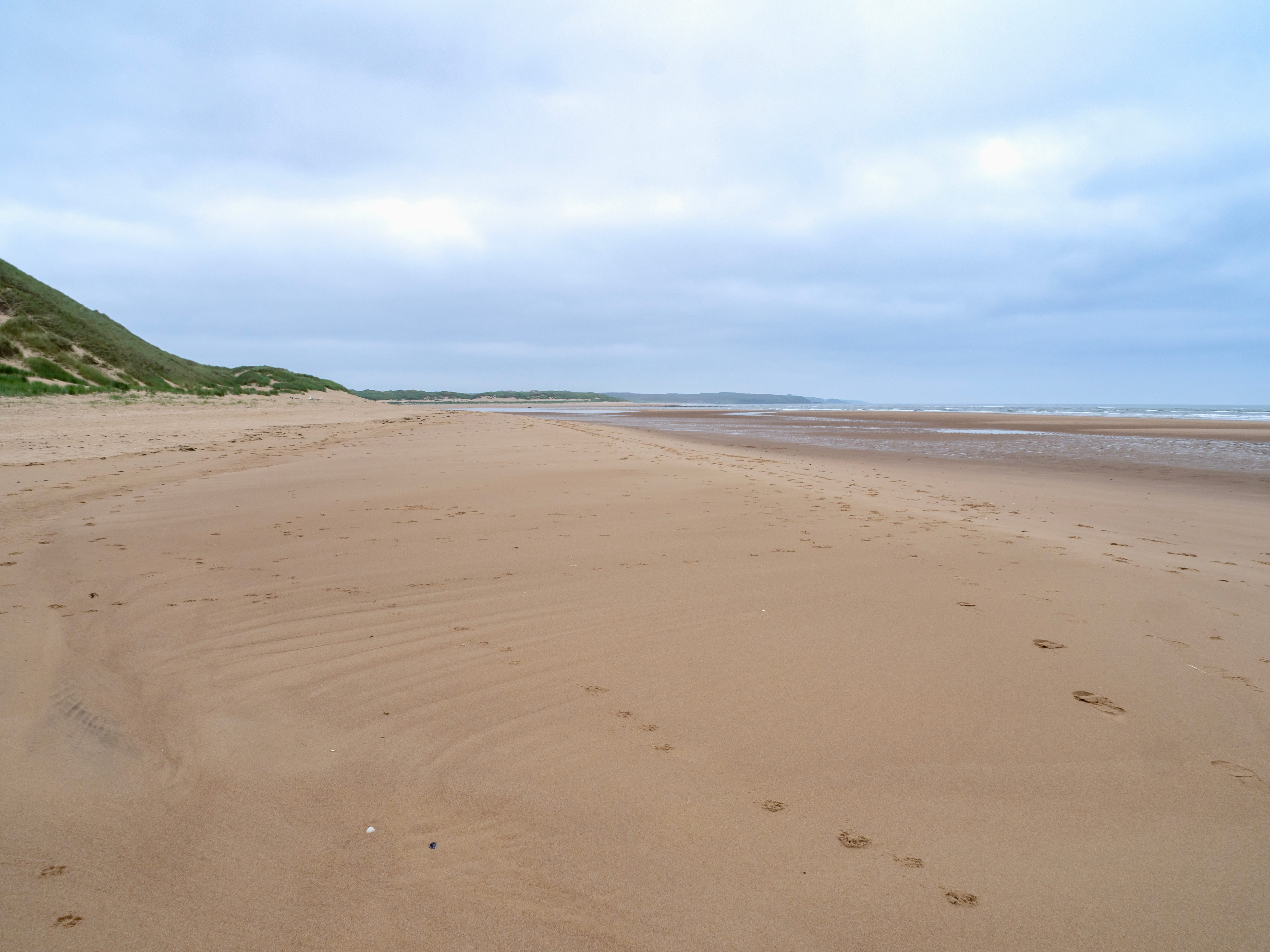
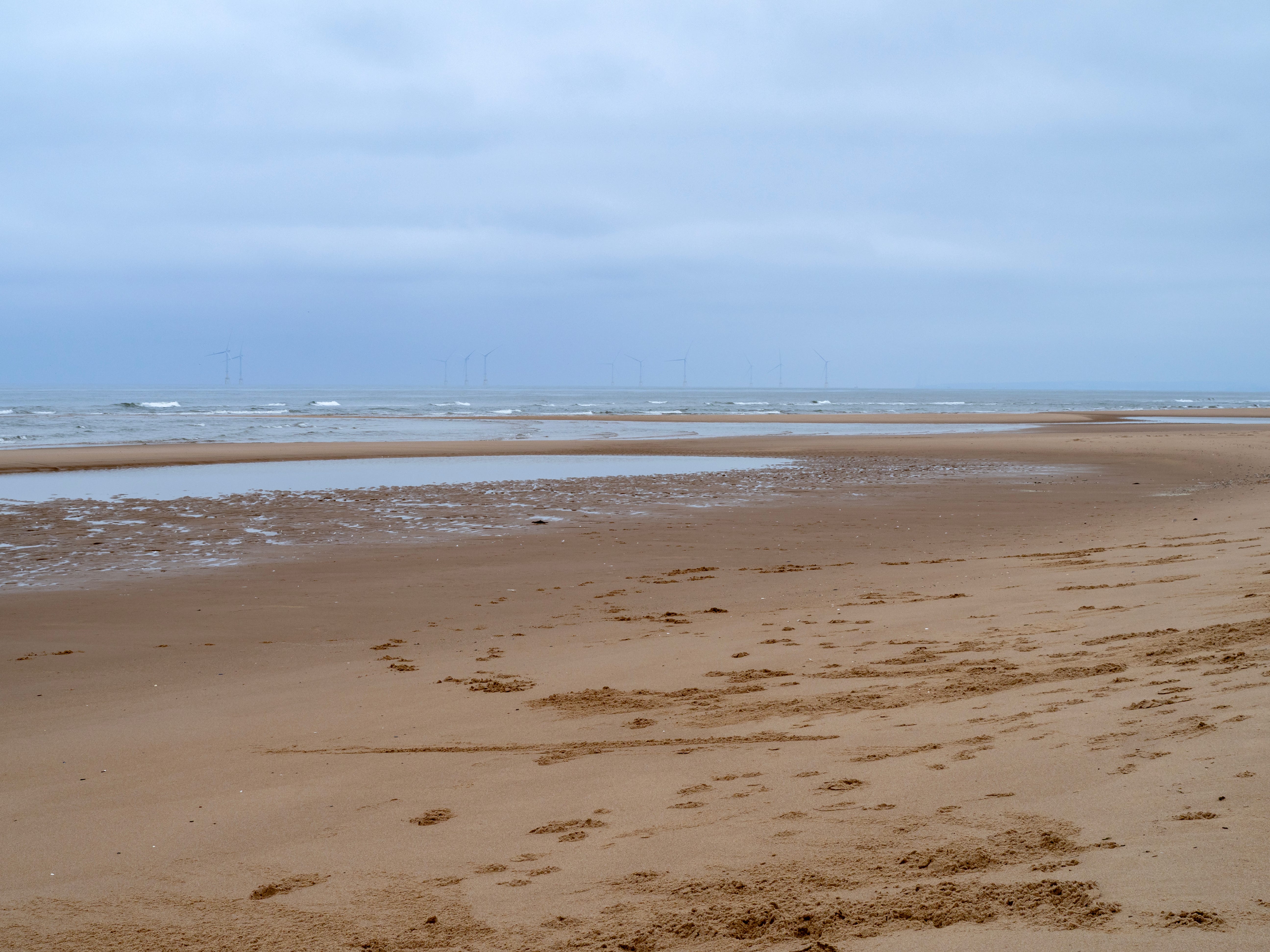
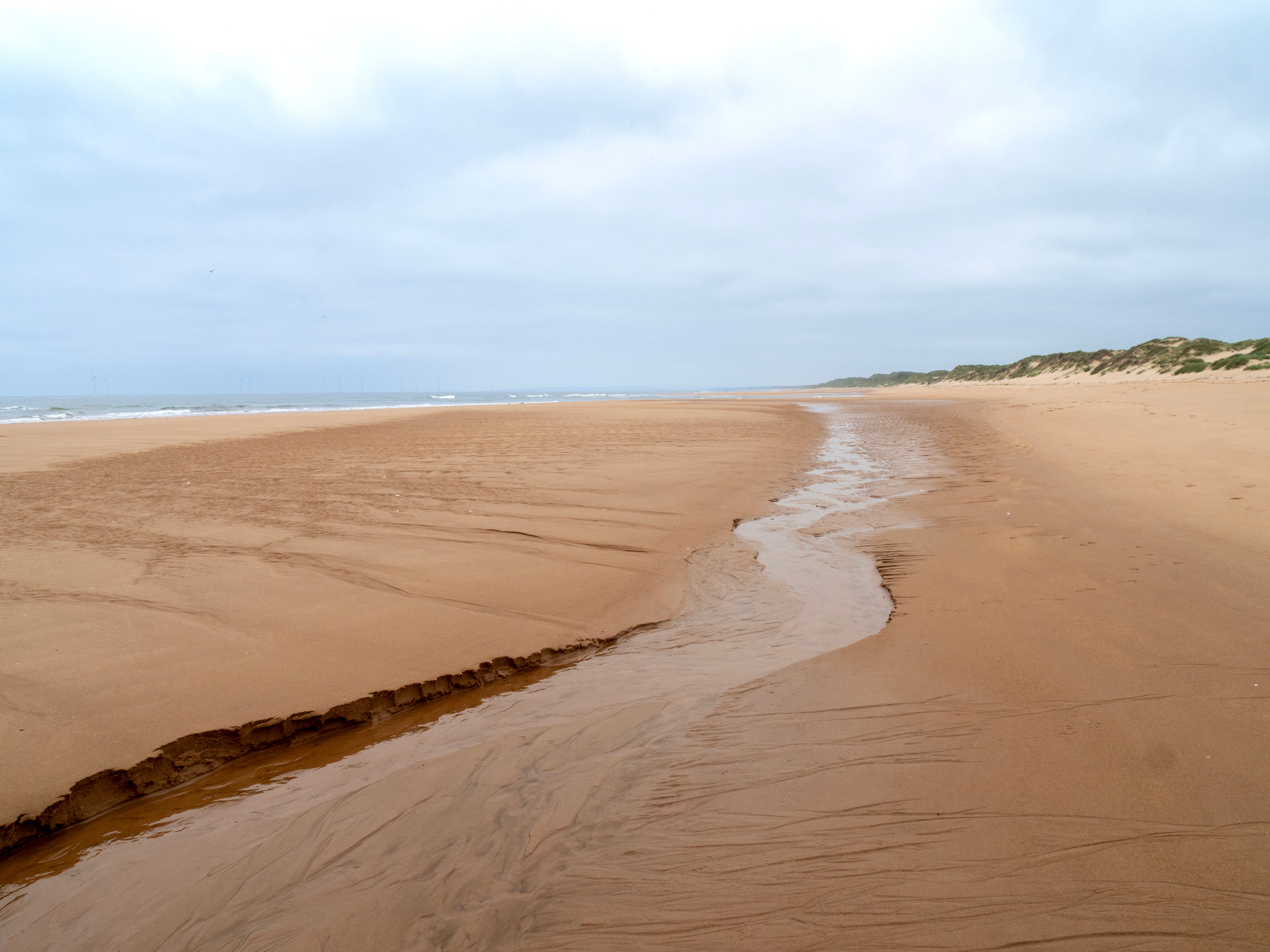
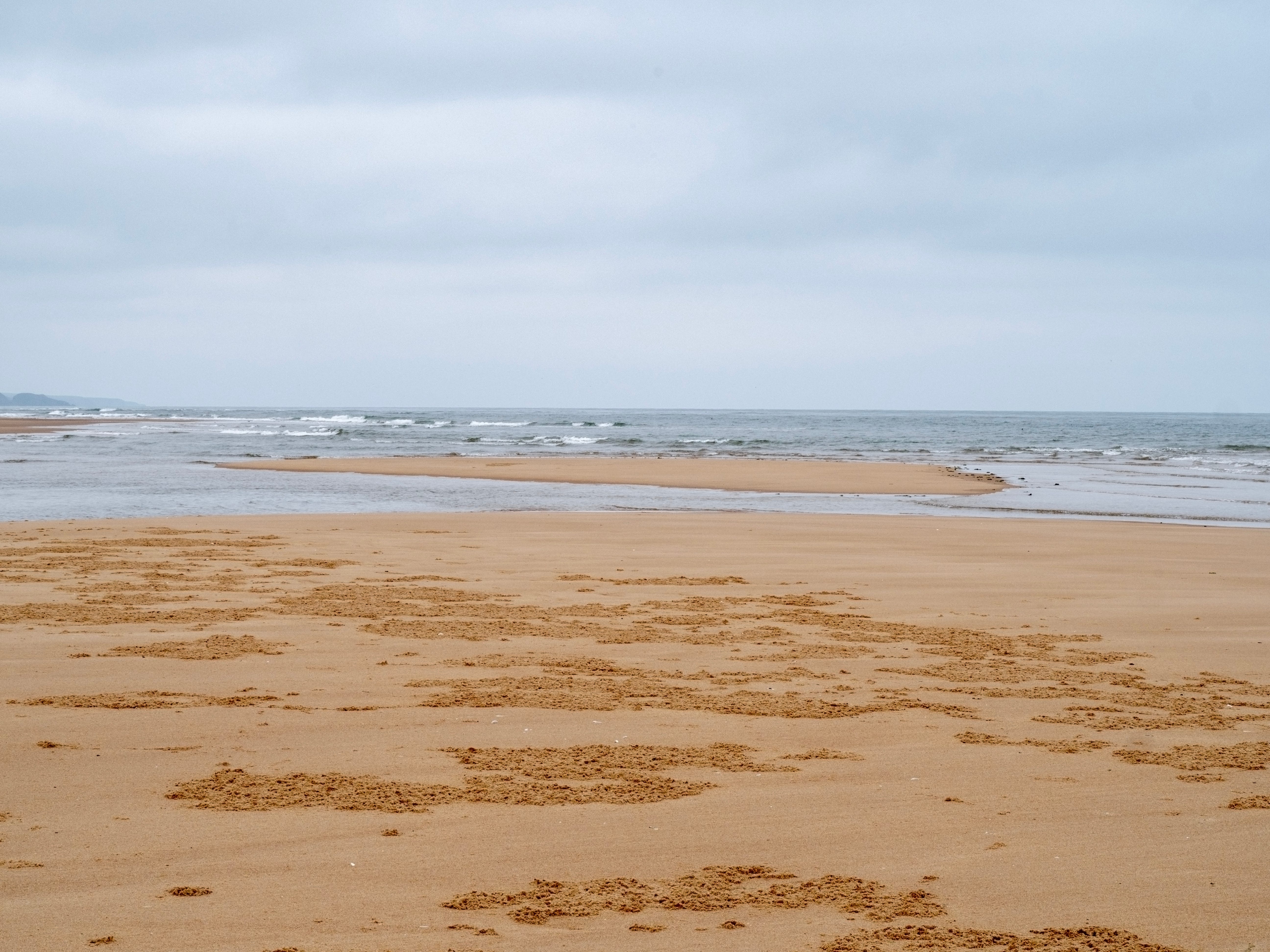
Soon after passing the pillbox we reached the glorious beach, which was almost completely deserted. The tide was low, and firm golden sand spread in both directions seemingly for miles. How amazing that we could have such a beautiful beach almost to ourselves in the middle of summer!
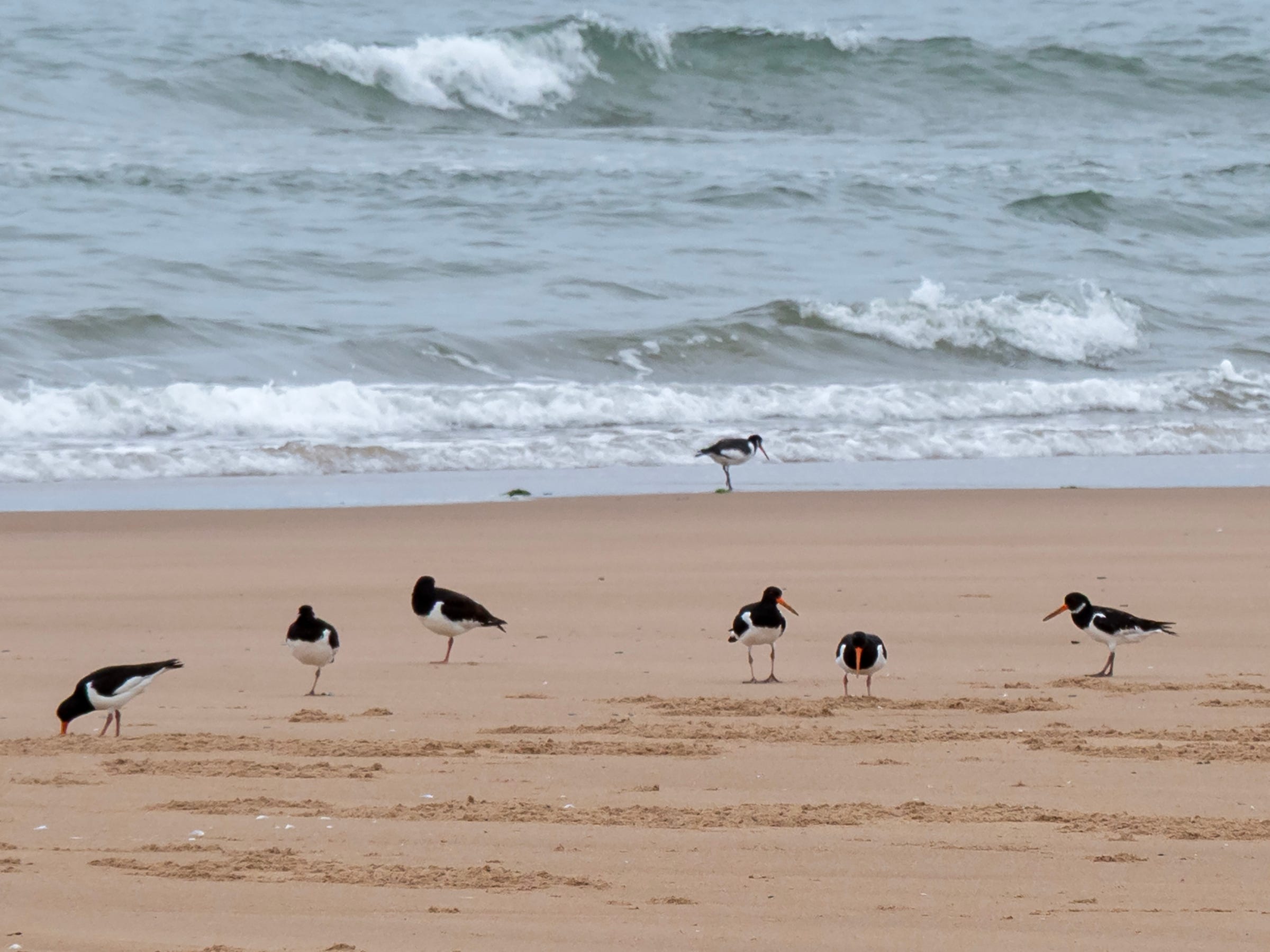
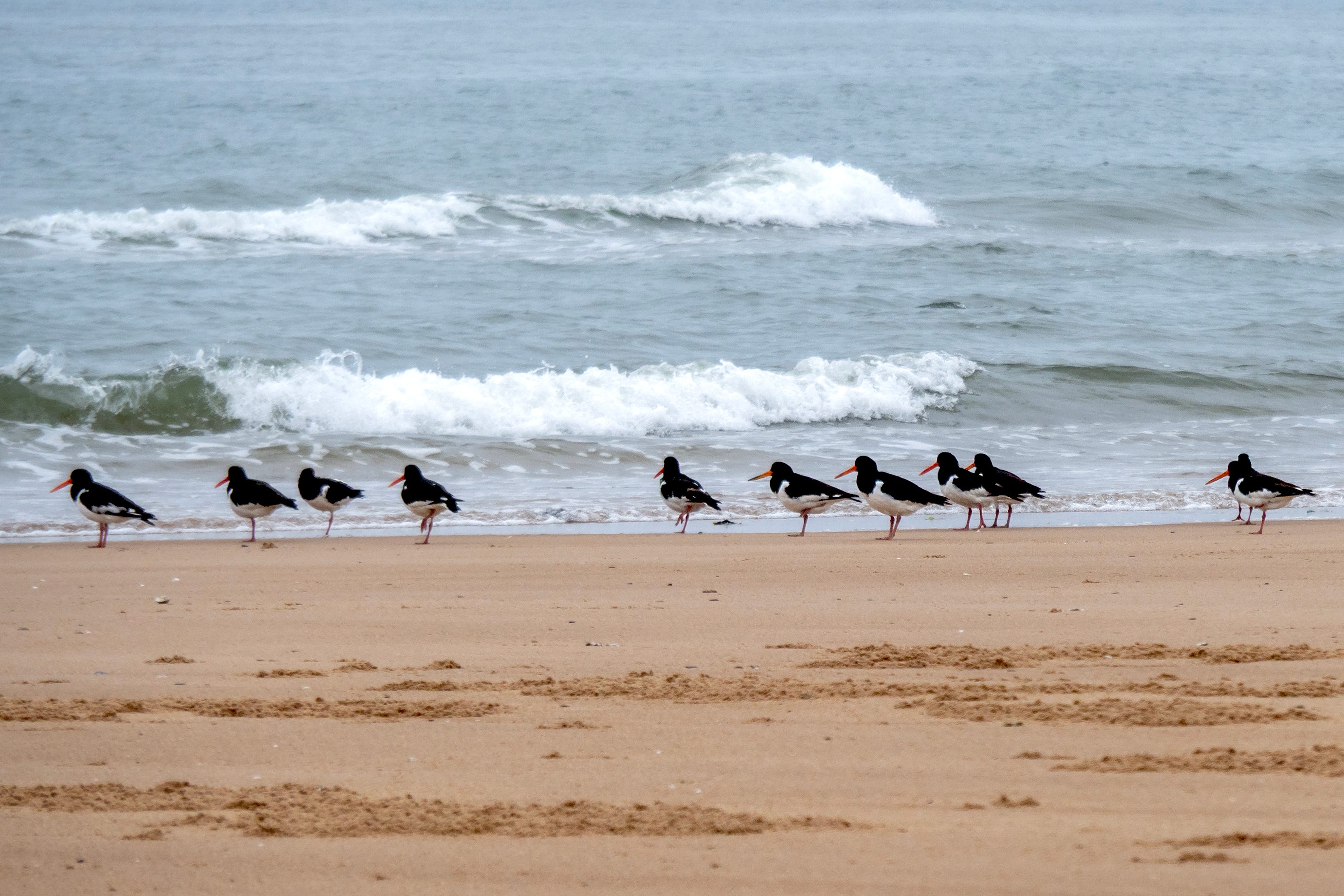
We soon came across a group of oystercatchers feeding on the shore. With their distinctive calls, smart black and white plumage and vivid red beaks and legs, these have always been among my favourite birds.
We spent some time enjoying exploring the beach. I was captivated by the patterns left by the constant ebb and flow of the tide.


When we returned to the estuary the tide was beginning to come in fast. Terns continually flew past carrying small fish back to the nesting colony to feed their chicks.
The seals that had previously been hauled out on the beach were now being reached by the waves. It was comical watching them being dislodged one by one, and then allowing themselves to drift up the estuary with the tide, often backwards, to some other unseen haul out site.
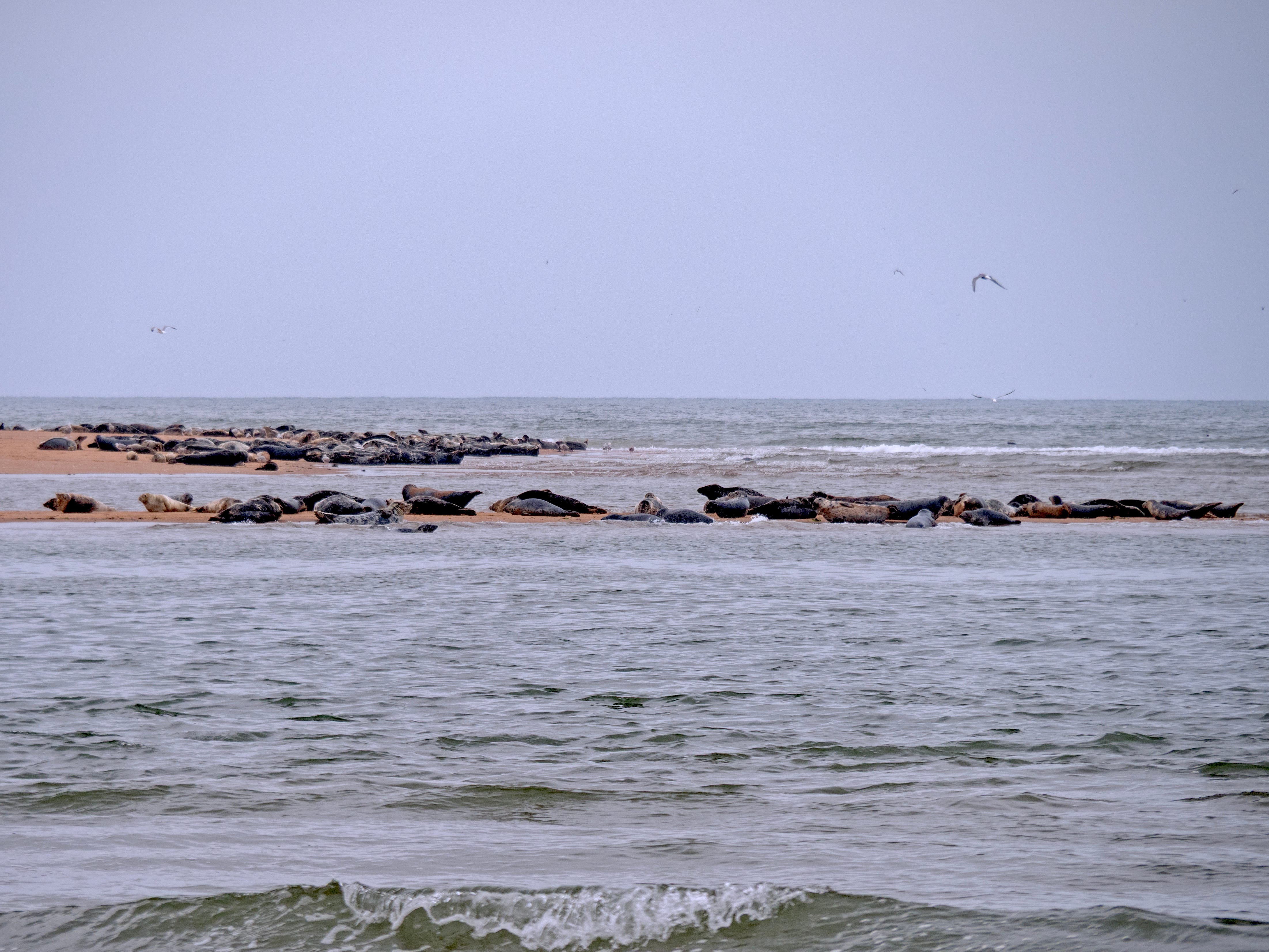
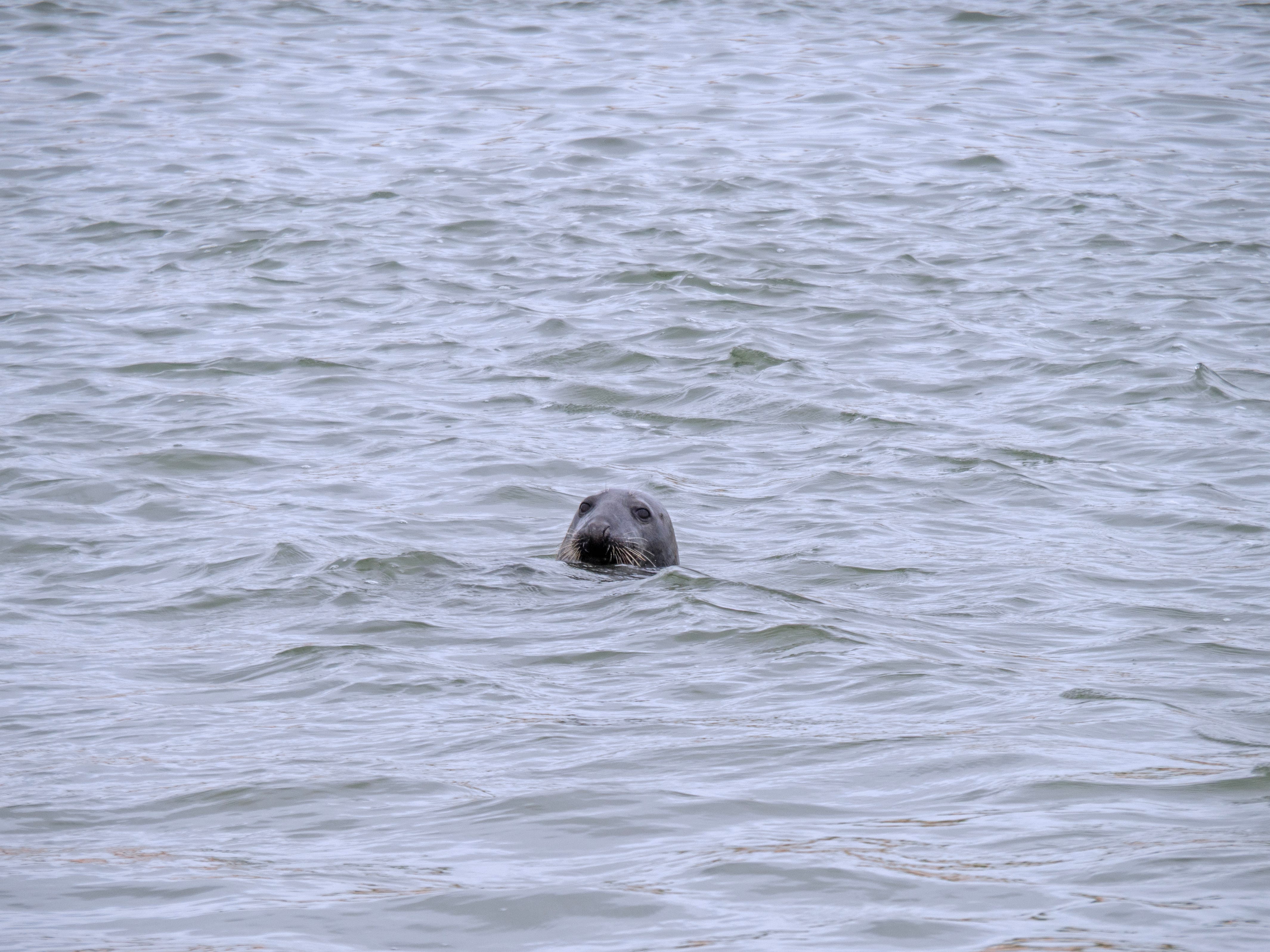
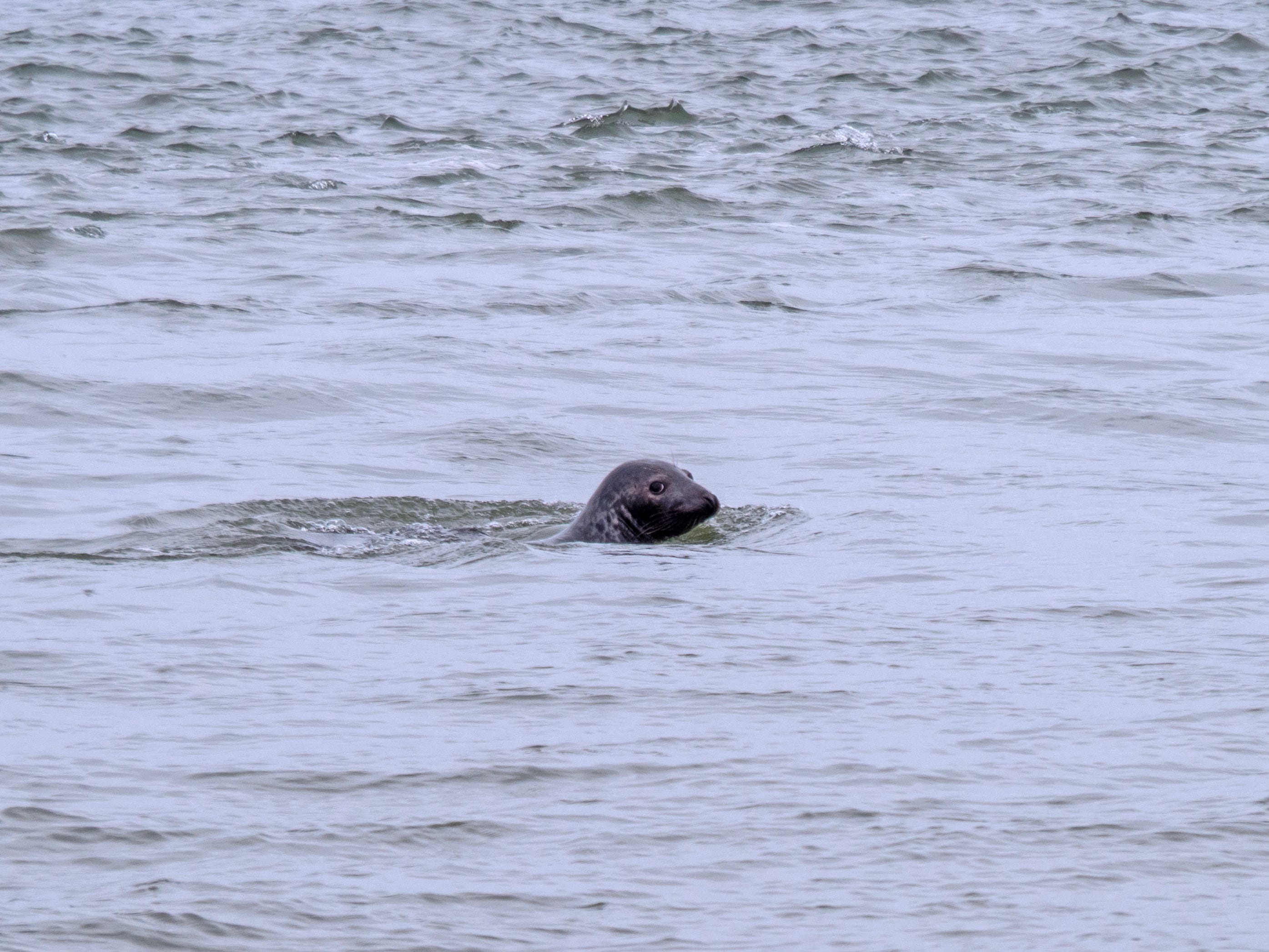
We very much enjoyed our visit to Newburgh Beach, especially as seal numbers are supposed to be at their lowest at this time of year. We look forward to returning in autumn when numbers increase and pups are born. Even without the seals, being able to walk for miles on such a beautiful deserted beach is always a special treat!
You can read more about the Forvie National Nature Reserve here.
If you don’t want to commit to a paid subscription but would still like to support my writing and photography you could always Buy Me A Coffee. Your support is so very much appreciated and makes the effort of writing and editing the photos worthwhile!
What an amazing place! I would love to see it. Will you report on the term colony at some point?
We have harbour seals here at Loch Fleet and a small number of greys. Fascinating to watch.