
Note - This is an imported post originally written a few years ago when I lived in North Yorkshire, England.
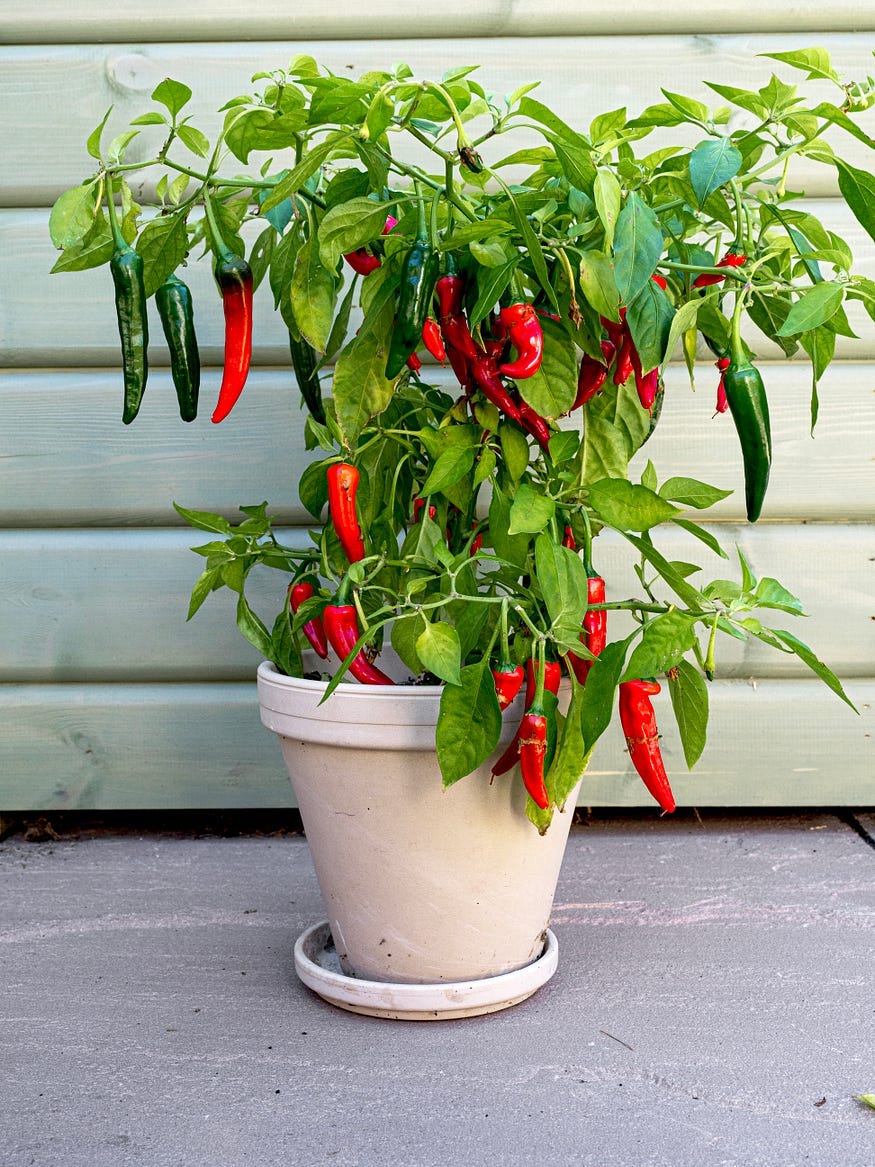
Many years ago I bought my partner Matt some chili pepper seeds as a gift (he loves chilies). The seeds grew in pots on the kitchen window ledge, the chilies later ripened in the garden, and they were impressively hot.
Flushed with success (and capsaicin) I decided to try growing some lettuce. It was too late in the year to start from seed, so I bought a punnet of young lettuce plants at a local garden centre. After planting them in bowls of all-purpose compost, they started to grow well.
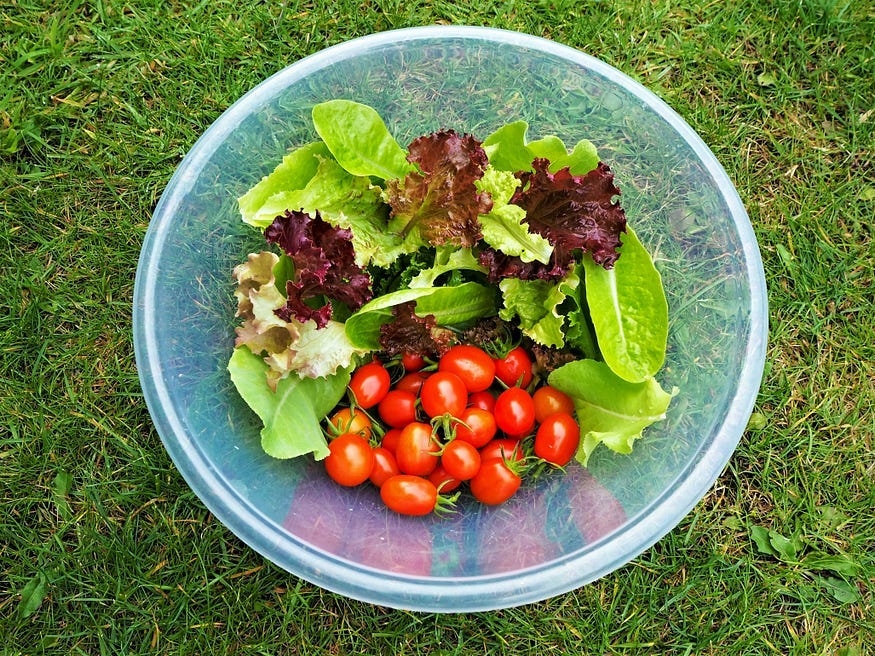
Then one day I realised I had forgotten to buy a bag of salad leaves, so I reluctantly cut all the biggest leaves off my young lettuce plants and used those. They were lovely — so much fresher and crisper than the usual bagged salad leaves. But I was really sad that I had already used up my young plants when they were just starting to grow.
But then, only a few days later, I was amazed that the leaves had almost regrown! It was like magic! How could they grow so quickly?
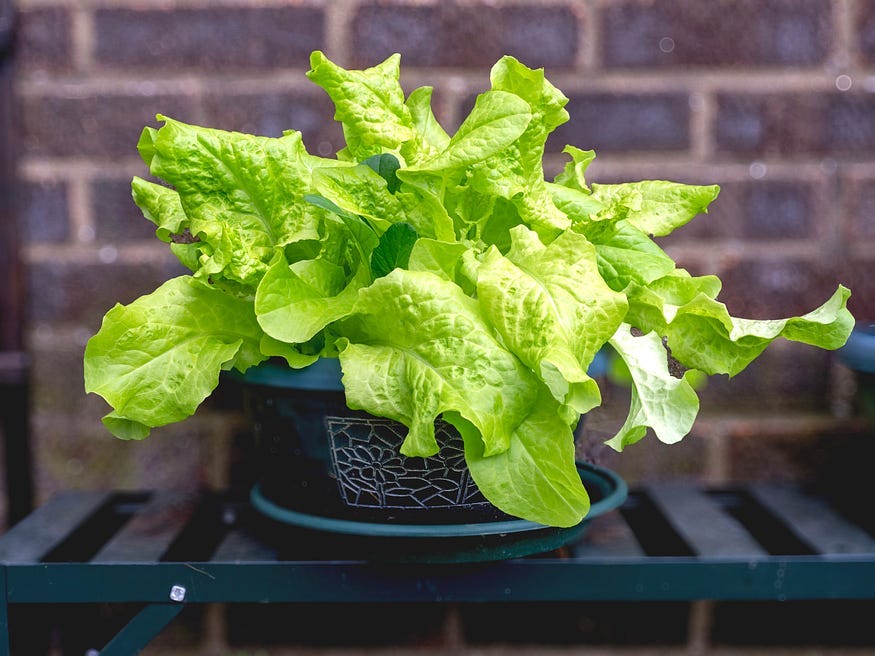
I suddenly understood the concept of ‘cut and come again’, and it was a complete revelation. From that moment, I was totally hooked. Growing edible plants became an obsession, which has stayed with me to this day.
There is something I should mention here. Before my obsession with food growing, I HATED gardening. I loathed getting my hands dirty (gardening gloves solved that issue). I have mobility problems which make bending to work in the ground painful and difficult (containers and raised beds helped with that one). And I was always working to tight deadlines, and wanted to spend my free time visiting interesting places, not struggling with weeds and dirt in the garden.
So from being an avid non-gardener, I suddenly had dreams of becoming self-sufficient in salads, herbs, vegetables, and fruit. Matt and I are not vegetarians, but our diet is predominantly plant-based. We love salads, vegetarian pasta dishes, and vegetarian curries. I thought how great it would be to grow most of our food in our own garden. How it would be so fresh, contain no chemicals, and be great for the environment. And I spent the next few years trying to achieve just that.
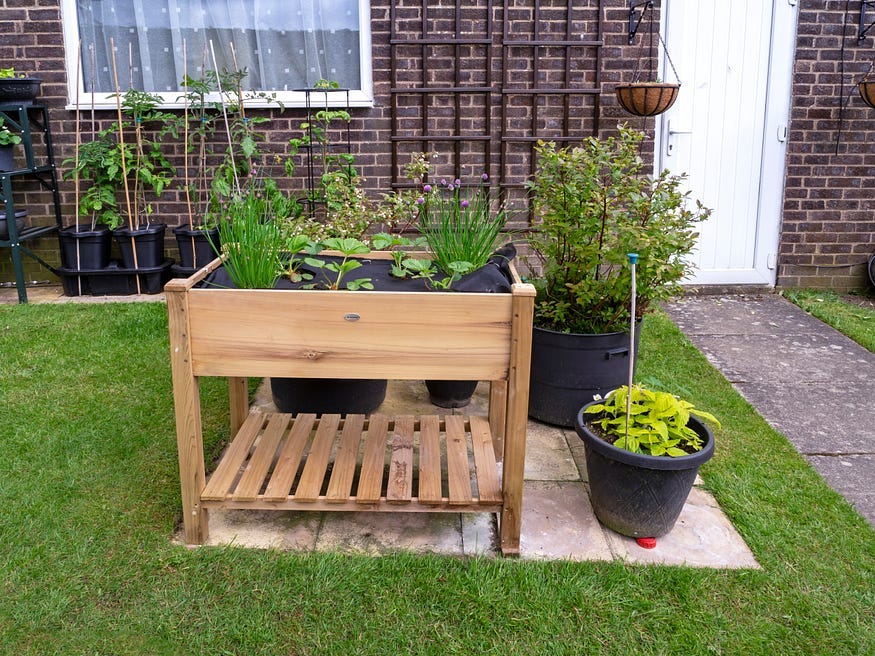
Now, I don’t do things by halves. From having no interest in the garden whatsoever, I was suddenly acquiring potting tables, raised planters, containers by the dozen, trellises, automatic watering systems, and ultimately a greenhouse and potting shed.
I completely lost count of how many bags of compost I got through in those early years, but visits to local garden centres became a very regular event indeed. (These days I compost our kitchen and garden waste at home to produce our own.)
And I spent hours perusing online seed catalogues, amazed by the sheer number of varieties available to home growers. This is one of the great benefits and joys of home growing — being able to try varieties you will never find in the shops because they are not suitable for packing and transporting on a commercial scale.
Of course, despite my limitless enthusiasm and early successes, I very soon found out that growing your own food is not always plain sailing.
At first, I was way too ambitious. I tried to grow far too many plants in containers that were far too small. They ended up being over- or under-watered (and in many cases, I couldn’t decide which).
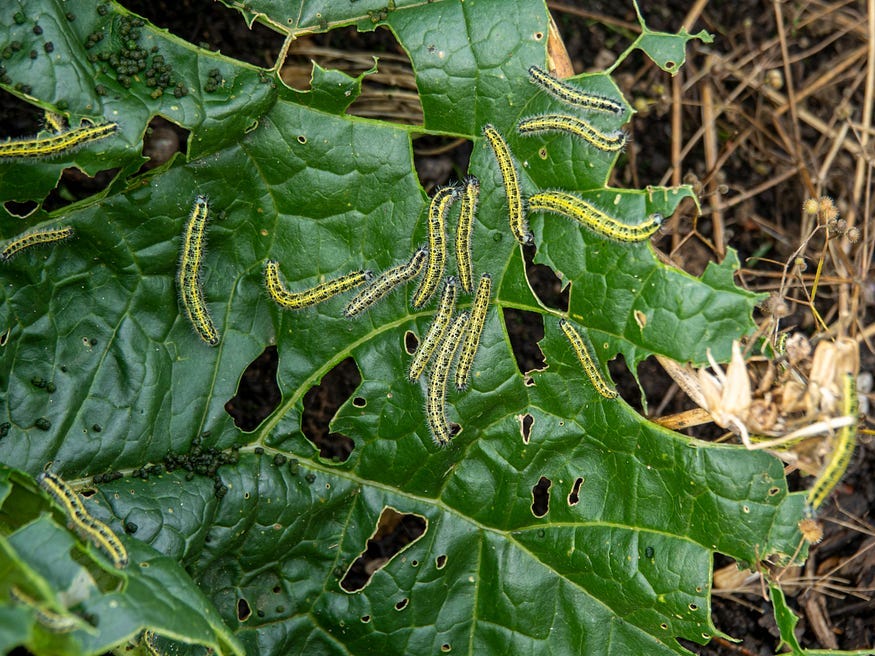
My salads got badly infested with aphids. My brassicas were attacked by slugs, flea beetles, and cabbage white caterpillars. Our lovely blackbirds took to rummaging through my pots looking for worms and often threw my carefully nurtured young seedlings out in the process. Storms resulted in pots being blown over or flooded. I soon learned that gardening tests your ingenuity, as I strove to devise methods to protect my plants from the weather and local pests without doing any harm to wildlife.
Also, much of my modestly sized Yorkshire garden didn’t receive full sun, and some of it received hardly any. Many plants didn’t thrive in conditions that were simply not suitable for them.
In those early years, I had a LOT of complete failures, and my initial enthusiasm was definitely tested. I often wondered why I was bothering, especially at the end of the season when so many things needed cutting back and clearing away (cleaning out moldy, root-bound, slug-riddled pots is not a job I enjoy).
But I had invested a lot of time and effort (and money) and was determined not to be put off. And despite the failures, there were some notable successes.
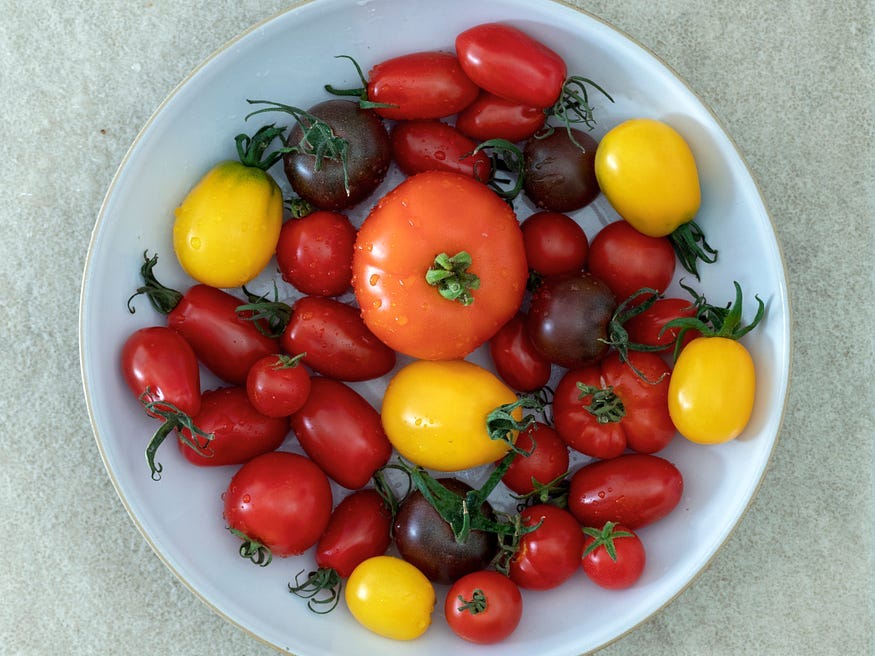
Tomato plants were a complete revelation. They grew so incredibly fast to the point of becoming completely rampant (it took me a while to get the hang of managing cordon varieties). But the plants were really productive, even with less than perfect care, and the tomatoes were sweet and lovely, unlike anything from a supermarket.
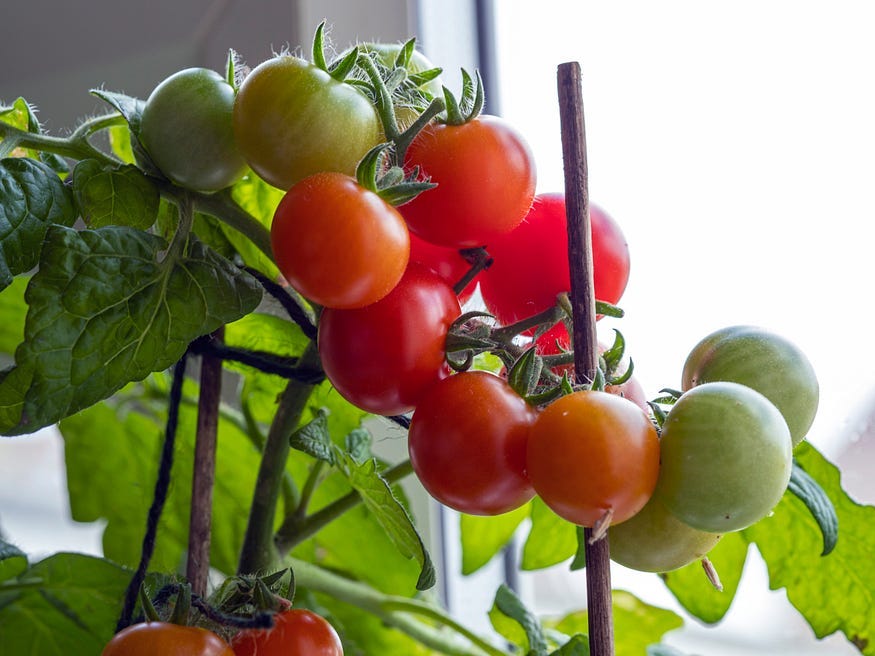
Unlike many edible plants tomatoes are largely left alone by the slugs and birds. The main difficulty was devising ways to support the weight of the fruit, and watering evenly to prevent splitting. Even now I get excited selecting new varieties to try each year, and harvesting them in the summer months is one of my great joys.
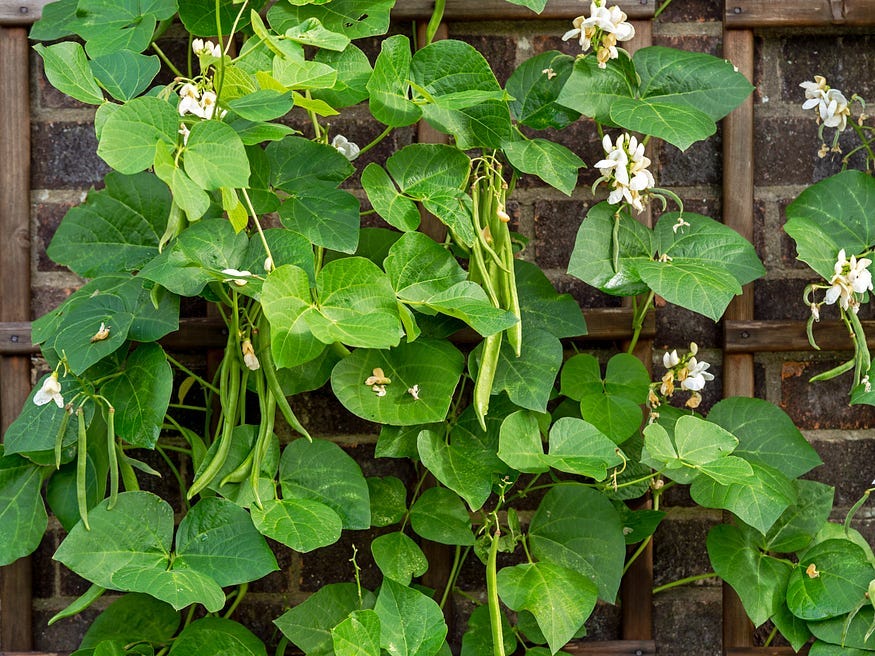
Runner beans were another delight. Once I got them started they literally flew up a trellis on my garage wall. They produced massive crops of beans that were lovely sliced up quite thinly and used in pasta dishes. I filled whole drawers in my freezer to keep me supplied all winter and into the following spring.
Other successes included strawberries, blueberries, chard, and aubergines. Over the years I have learned what works in my garden, and what doesn’t. I have stopped trying to grow everything, and instead concentrate on the crops that are successful for me.
I think one of the greatest lessons I have learned is that every garden is unique, and what is easy to grow in one garden can be impossible in another. I am always reading that spinach and rocket are easy crops, but I never had success with them in my Yorkshire garden. Spinach either didn’t grow at all or just went to seed at the first sign of sun, while rocket always seemed to get infested.
Whereas aubergines should have been almost impossible to grow outside in my northerly garden, but surprisingly I got really good crops from dwarf plants that I grew in pots, even in cold seasons. The little egg-sized aubergines are perfect in roasted vegetable pasta dishes and curries. I love them.
I am so glad I bought Matt that first pack of chili seeds all those years ago. Little did I know what it would lead to! Home growing is now such a big part of my life, and I cannot imagine it being otherwise.
Super read Angie. We have raised beds at home and an allotment. We just love it. Time just flies on the allotment and it is so relaxing.