
Planning and Planting our New Orchard
The first of our fruit trees are now in the ground!
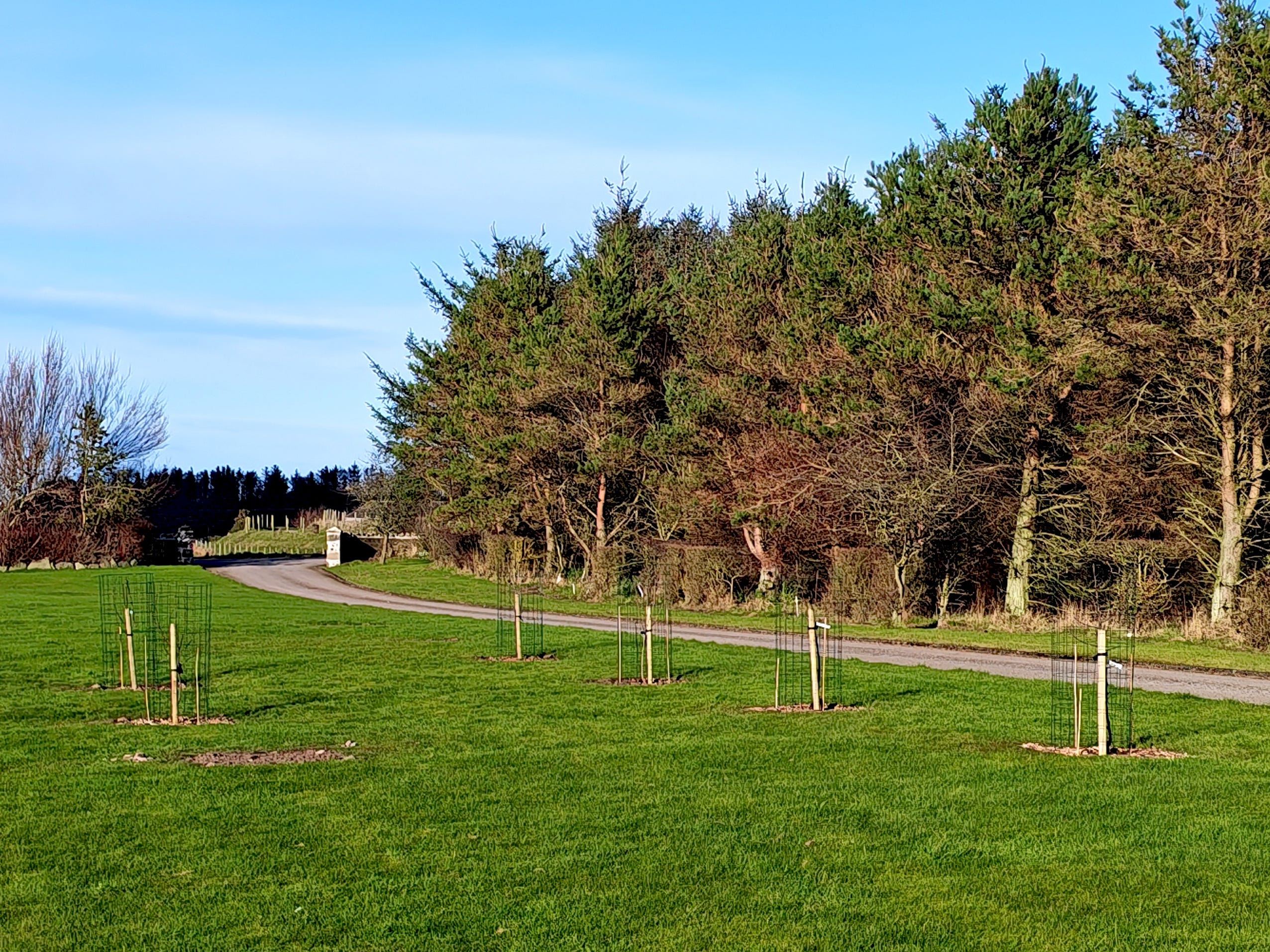
Yesterday was an exciting day for us because the first of our bare root fruit trees arrived!
Having an orchard has long been a dream of mine. When we moved to Aberdeenshire early this year, getting to work on creating the orchard was my No. 1 priority. I wanted to get the trees ordered and planted during this year’s bare root season, which ends around late March.
Buying bare root trees in winter, as opposed to potted trees in summer, is much cheaper. Planting is easier, and the trees establish faster. I didn’t want to miss the season and have to wait an extra year for the trees to begin producing fruit.
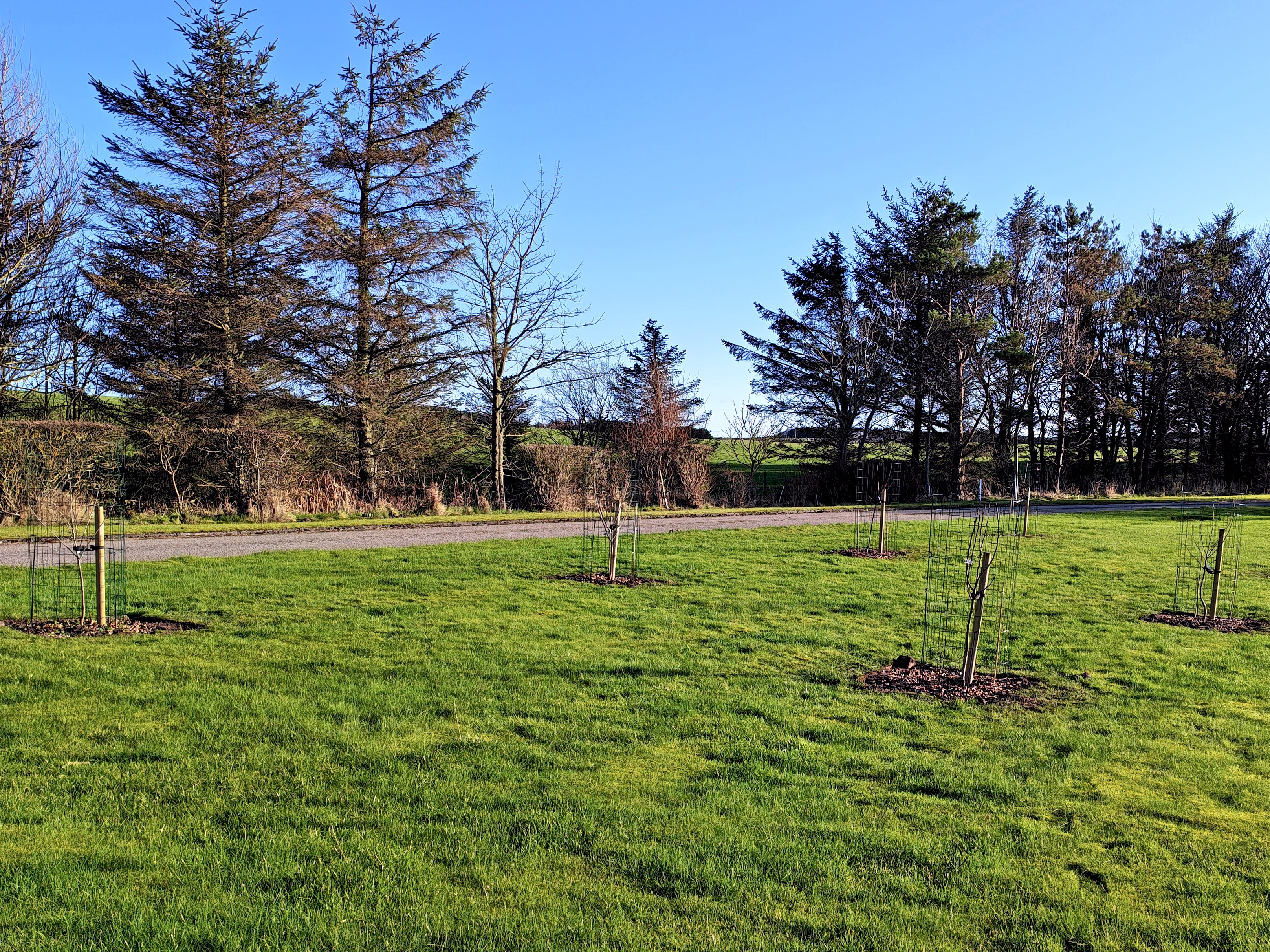
I have spent many hours pondering over which varieties of trees to select, bearing in mind our northerly location and the rather exposed and windy site. And trying to decide on the best rootstock. For any particular variety of fruit tree the rootstock determines vigour and the final size that the tree will attain. Dwarfing rootstocks produce small trees which are easy to prune and harvest. But often trees on dwarf rootstock struggle in cold and windy sites, and are not ideal for the north of Scotland.
When I finally came to order the trees I had to make a few last-minute changes because some of the varieties I had chosen were sold out, but the final selection was:
Apples (rootstock M26)
Red Falstaff - a very prolific variety producing heavy crops of beautiful red apples that are crisp, sweet and juicy and store well
Greensleeves - an attractive variety with lovely blossom producing green apples that ripen to a golden colour, with a nice balance of sweetness and acidity. Known for starting to produce fruit at a very young age.
Discovery - an early season variety known for being very successful in the north.
Pears (rootstock Quince A)
Beth - a compact tree producing small but beautifully sweet pears with a melting texture
Concorde - a variety producing Conference-like pears, but with better flavour and improved disease resistance.
Cherries (rootstock Colt)
Morello - a variety known for doing well in less than ideal conditions. Produces acidic cherries that are great for baking and preserving.
Stella - produces heavy crops of sweet cherries ideal for eating fresh, known for doing well in the north.
Plums and Damsons (rootstock St Julien A)
Opal Plum - a variety with excellent flavour, suitable for eating fresh or cooking. Known for being successful in the north.
Merryweather Damson - a very hardy variety, producing fairly large damsons predominantly for cooking and preserving, but also suitable for eating fresh when fully ripe.
There are actually a couple of apple trees and at least one pear tree already present in a different area of the garden, but I have no idea what variety they are. They will hopefully provide us with some fruit while we wait for ours to reach fruit bearing age.
I have also ordered many soft fruit bushes, including blueberries, honeyberries, raspberries, blackberries, gooseberries and currants. And lots of strawberry plants which I will grow in containers in the greenhouse to protect them from badgers.
This sounds like a lot of fruit for two people! But much of the fruit will be frozen or used to make preserves with an aim to keep us supplied throughout the year. Any excess can be given to neighbours or perhaps donated to local foodbanks or animal sanctuaries - something to look into in the future.
For our first few weeks here the weather was simply not suitable for preparing the ground for planting trees. But eventually we got some dry days and wasted no time in getting down to the task.
For each planned tree we first dug a 1m square hole in the grass. This was harder work than I expected, and I have to admit Matt did most of the digging! The turf we removed came in very handy for putting upside-down in our new raised beds, thus reducing the amount of topsoil that will be required.
We dug over the soil in each of the planting holes, removing any large stones, and added a little home-made compost (brought from our previous home in Yorkshire) and a small amount of blood, fish and bone to provide slow-release nutrients.
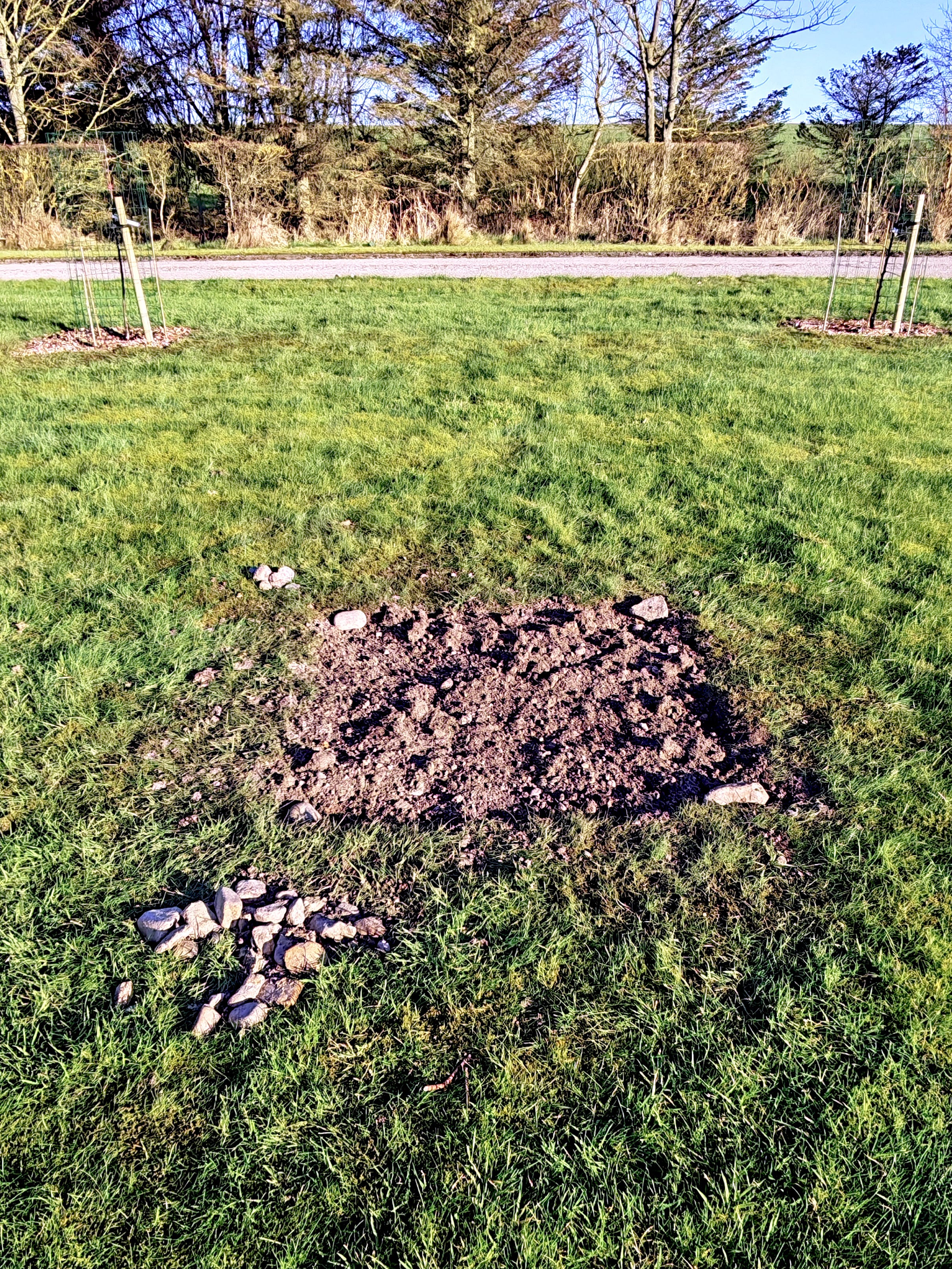
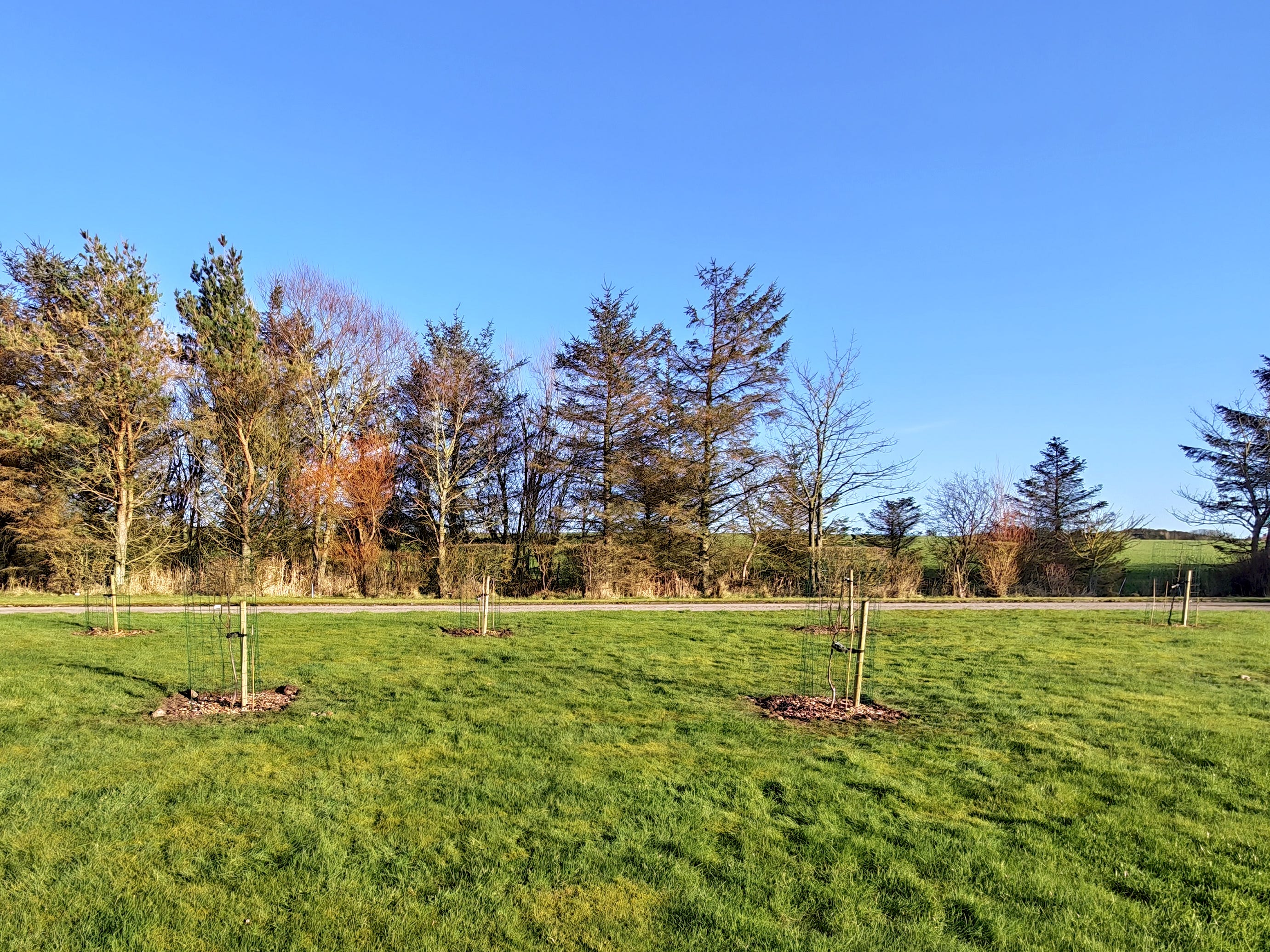
Then, yesterday, in glorious sunshine, it was finally time to plant the first six trees (with the remaining three coming next week).
The actual planting was easy in the pre-prepared holes. We made sure the graft-union between the rootstock and the main tree was above soil level, sprinkled ‘Rootgrow’ micorrhizal fungi on the roots to encourage strong root development, then gently heeled the trees in and gave each one a sturdy stake. We watered them well, and used woodchip that we have prepared ourselves (from fallen twigs and branches around the garden) as a mulch to help keep the moisture in.
The final task was to make a sturdy cage around each tree using wire netting to protect them from grazing deer and rabbits.
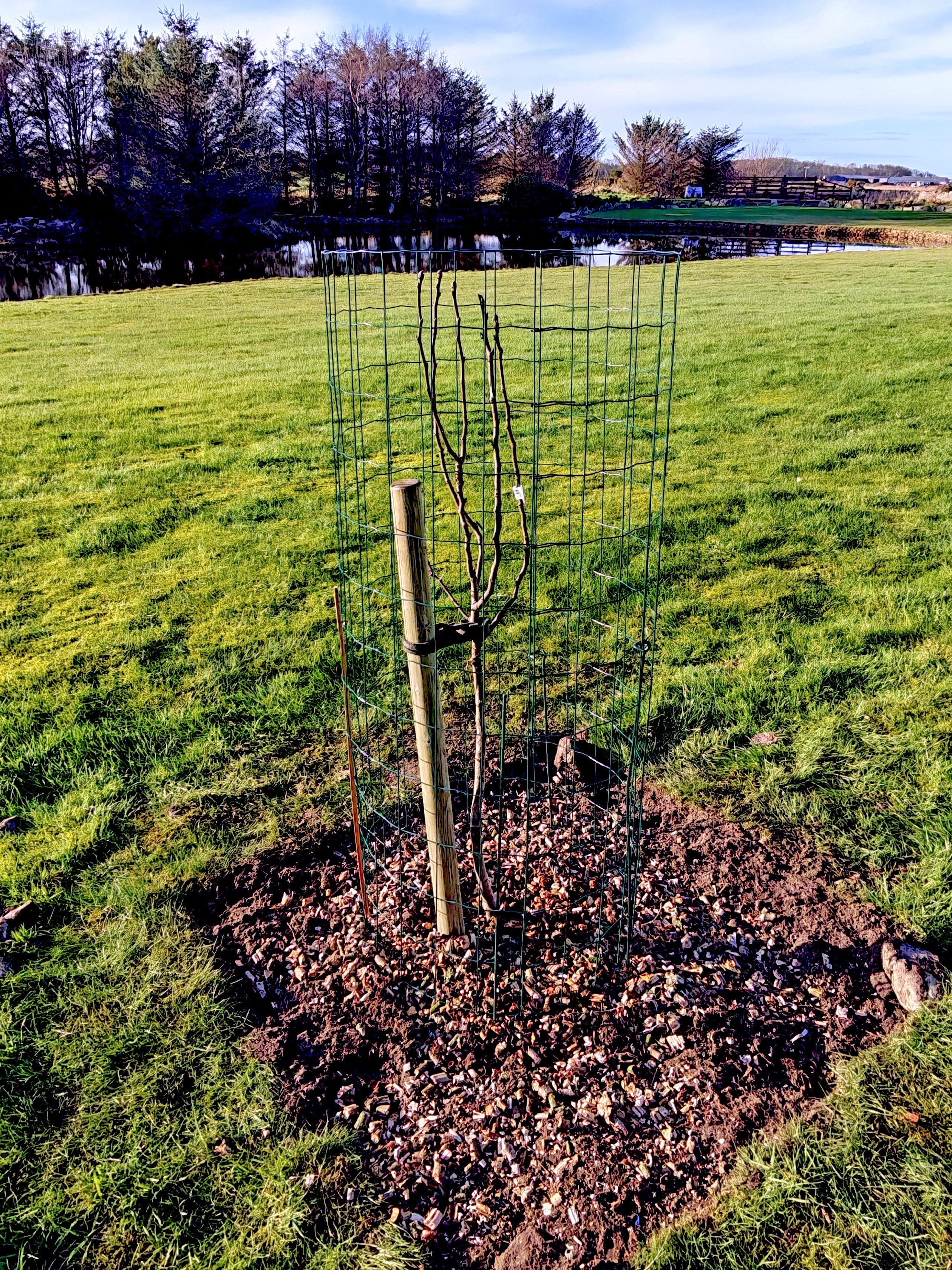
In time I will extend the grass-free zone around each tree using sheet mulching, and plant some companion plants like chives to repel pests and attract pollinators and clover to fix nitrogen.
It is the first time we have planted any trees, and I am really pleased with the result. Of course, time will tell how well they stand up to the wind and the foraging deer. I hope they fare well, and can’t wait for them to produce their first spring blossom - hopefully buzzing with bees. And of course the first fruit - though I think this will be a couple of years or so. Watch out for future updates!
Looks amazing and will be there for insects and future generations.
This is looking fabulous Angie! I'll bet it's a really satisfying feeling looking at your hard work.
I'm going to check out 'Stella' cherry trees as we eat a lot of frozen cherries in this house. I've never grown them before.